America’s Scenic Byways You Can Drive in a Weekend
America’s scenic byways reward a slower pace, but a weekend does not have to become a mileage contest. The practical approach is to choose one complete short byway or one clearly defined section of a longer road, arrive near the route on Friday, and leave Sunday with enough margin for campground check-in, viewpoints and changing conditions.

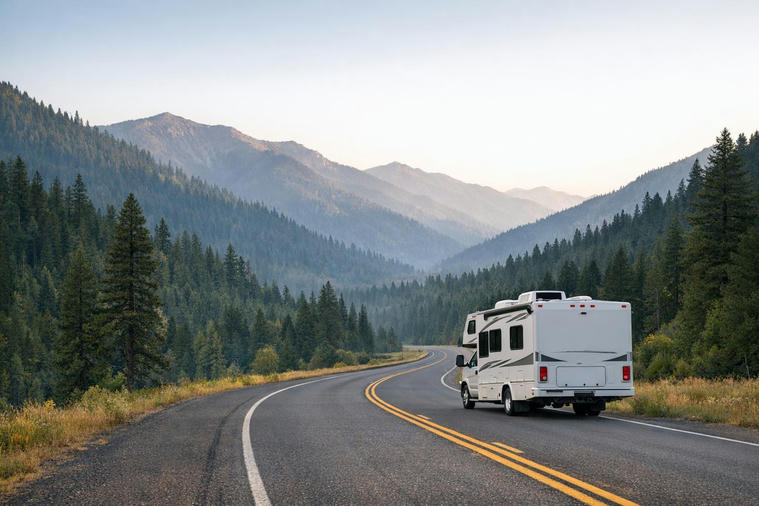
The Federal Highway Administration’s America’s Byways directory is the official starting point for nationally designated routes. The four options below span New England, the Appalachians, the Mountain West and the Pacific Northwest. Each can form the scenic core of a two- or three-night RV break. Rental collection, positioning and return transfers are separate and may require extra nights.
What makes a scenic byway work for a weekend?
A weekend route should have a manageable scenic section, legal places to stop and a confirmed overnight base. It should also leave room to change plans if weather, road work or a campground closure affects the route. The plans below therefore use Friday, Saturday and Sunday rather than exact drive-time promises.
Before choosing a route:
- Check the official byway map and current road status.
- Confirm every campsite for the date and the motorhome’s total length.
- Record the RV’s height, width and length in both feet and meters.
- Keep the first day short enough to complete rental orientation, groceries and campsite setup in daylight.
- Treat suggested stops as options, not a fixed checklist.
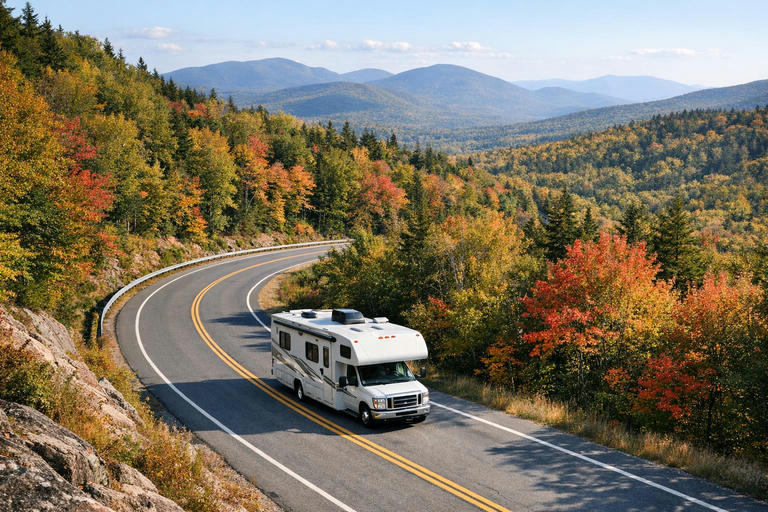
1. Kancamagus Highway, New Hampshire
New Hampshire’s official tourism site describes the Kancamagus Highway as a 34.5-mile section of Route 112 through White Mountain National Forest. Its Conway-to-Lincoln scale makes it the most compact complete route in this guide. Use the official White Mountain scenic-drive overview to understand the corridor, then check current forest and road notices before departure.
A simple weekend shape
Friday
Reach the Conway side and settle at a confirmed campsite. Covered Bridge Campground is an official Forest Service option on the eastern side of the byway; verify its season, reservation status, access directions and vehicle fit.
Saturday
Follow Route 112 west. Use established day-use areas only when they are open and suitable for the RV. Leave time for short walks rather than treating the road as a nonstop transfer.
Sunday
Finish near Lincoln. Hancock Campground is an official Forest Service option at the western end; check the listing for current access and site details. Continue to the next booked stop or begin the return transfer after a restful night.
This is a good choice for travelers who want one complete byway without changing plans repeatedly. Autumn can be especially busy, so a confirmed campsite and flexible stopping plan matter more than an ambitious attraction list.
2. Blue Ridge Parkway, North Carolina or Virginia
The National Park Service’s Blue Ridge Parkway guide covers a 469-mile road, so the entire parkway is not a weekend drive. The weekend-friendly version is one open district or a compact section around a single campground. The Blowing Rock and Julian Price area provides a useful base for checking nearby open segments, overlooks and walking options without attempting the full route.
A simple weekend shape
Friday
Arrive at Julian Price Campground if the campground is operating and the booked site fits the RV. If it is unavailable, select another named campground from the current NPS camping information rather than relying on informal roadside camping.
Saturday
Choose one open parkway section on the current NPS road-status map. Stop only in designated parking areas that can accommodate the vehicle. Return to the same campsite rather than packing up for a second base.
Sunday
Drive a different confirmed-open section, or revisit a shorter section in better light, before leaving the parkway by a major connecting road.
North Carolina contains most of the parkway’s tunnels. If the selected section includes one, compare the rental RV’s measured height with the official NPS tunnel-clearance table. Never cross the center line to gain clearance.
3. Scenic Byway 12, Utah
Utah’s Highway 12 runs between the Panguitch and Torrey areas through red-rock and high-country landscapes. The official Scenic Byway 12 guide describes a route of about 123 miles. That distance can form the core of a long weekend, but the transfer from a rental gateway is separate from the byway plan.
A simple long-weekend shape
Friday
Begin near the western end after completing any gateway transfer on an earlier day. Confirm a campsite in the Bryce Canyon or Panguitch area and check current route and park alerts.
Saturday
Follow the byway east to Escalante at a sightseeing pace. Wide Hollow Campground at Escalante Petrified Forest State Park provides an official mid-route stay option. Verify the exact site, utilities, operating status and reservation before travel.
Sunday
Continue toward Torrey, using designated pullouts and allowing for curves, grades and changing weather. If the onward itinerary includes Capitol Reef, Fruita Campground is an official eastern-area option, subject to current availability and vehicle limits. Treat Torrey as the Sunday finish and connect it to a separately planned onward night or transfer day; it is not a same-day Salt Lake City rental-return plan.
Travelers starting with an RV rental in Salt Lake City should add realistic transfer nights rather than promising to collect the vehicle, drive the complete byway and return it within the same two-night weekend. Compare Utah RV rentals when choosing a gateway and vehicle.
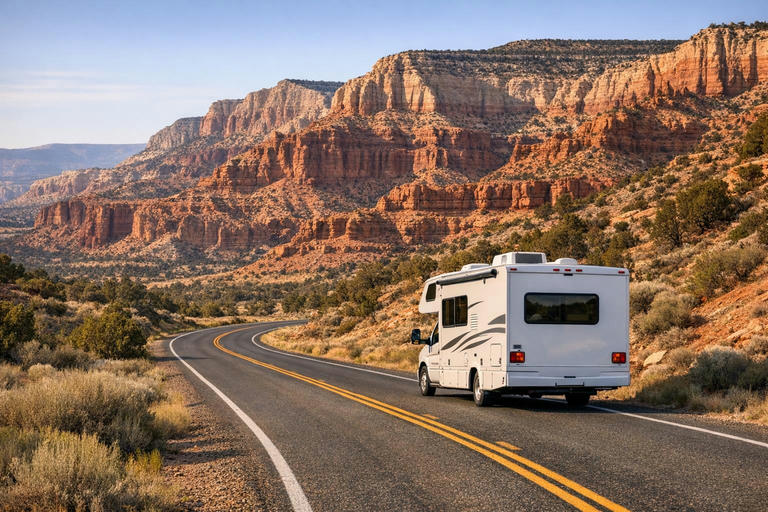
4. Historic Columbia River Highway Scenic Byway, Oregon
Travel Oregon’s official Historic Columbia River Highway Scenic Byway guide describes a 70-mile route through the Columbia River Gorge. It works best as a two-day exploration because the historic corridor includes popular viewpoints, waterfalls and sections that require current route planning.
A simple weekend shape
Friday
Reach the gorge and settle into a confirmed campsite. Memaloose State Park is an official Oregon State Parks base; confirm seasonal operation, reservation status and the dimensions of the selected site.
Saturday
Use the official current map and travel alerts to select one drivable section of the byway. Choose only a few established stops and continue if an access area cannot safely accommodate the motorhome.
Sunday
Explore a second confirmed-open section before continuing toward Portland or The Dalles. Navigate the current official drivable route; do not assume every part of the historic alignment is open to motor vehicles or that a saved map reflects current restrictions.
This option suits travelers who prefer waterfalls and river scenery to high-elevation roads. Popular access points can be busy, so the weekend remains flexible: the byway is the destination, while any individual stop is optional.
RV planning rules that apply to every byway
Scenic roads vary in grade, curve radius, clearance and services. A self-propelled RV does not require a second vehicle, but every day must be planned around the motorhome you actually receive.
- Complete the rental orientation before leaving the depot.
- Use the rental company’s vehicle-specific guidance for descents and braking.
- Check official closures, weather and alerts again each morning.
- Keep a fuel margin and identify suitable fuel stops before entering a quieter corridor.
- Use designated pullouts; never stop in a travel lane for a photograph.
- Confirm campsite access, site length, utilities, check-in procedure and operating dates on the official listing.
- Allow time before the return deadline for refueling and any agreed waste or cleaning procedures.
Frequently Asked Questions
Do I need to drive an entire scenic byway in one weekend?
Do I need to drive an entire scenic byway in one weekend?
No. A short byway such as the Kancamagus Highway can be completed as one route, while a long road such as the Blue Ridge Parkway is better treated as one district or section. State the planned start and finish when booking campsites.
How many hours should I drive each day?
How many hours should I drive each day?
There is no single safe number for every route or renter. Build the weekend around Friday arrival, one principal scenic day and a shorter Sunday, then check current conditions and your rental-return schedule. Treat navigation estimates as planning aids, not guarantees.
Can a large motorhome use these routes?
Can a large motorhome use these routes?
Suitability depends on the specific vehicle, section, current restrictions and campsite. Check the RV’s dimensions against official road and campground information. On the Blue Ridge Parkway, use the NPS tunnel-clearance table if a planned section includes tunnels.
Do I need campground reservations?
Do I need campground reservations?
Reservation systems and operating seasons differ. Check each linked official campground page for the exact dates and vehicle length, and keep an alternative outside the corridor. Do not assume a walk-up site will be available.
Can I collect an RV on Friday and start immediately?
Can I collect an RV on Friday and start immediately?
Possibly, but collection, orientation and loading take time. Keep the first transfer modest and aim to set up camp in daylight. If the depot is far from the byway, add a gateway night rather than compressing the scenic route.
Choose one road and leave room for the view
A successful weekend byway trip is not measured by how many states or attractions it covers. Choose one route that fits the season, confirm two nights, and keep Sunday flexible. New Hampshire offers a compact forest crossing, the Blue Ridge Parkway rewards a section-based plan, Utah provides a longer red-rock journey, and Oregon pairs river scenery with historic road engineering. With official information and a realistic RV schedule, each can become a focused American road trip rather than a rushed transfer.
Ready to compare USA RV rentals?
Use the compact search below to check live availability, compare motorhome options, and start shaping your route.