Blue Ridge Parkway by RV: Leaf-Peeping Without the Gridlock
A Blue Ridge Parkway RV fall trip is one of the most scenic drives in the eastern United States. In autumn, the Appalachian Mountains form rolling layers of red, orange, and gold along a two-lane scenic road managed by the National Park Service.

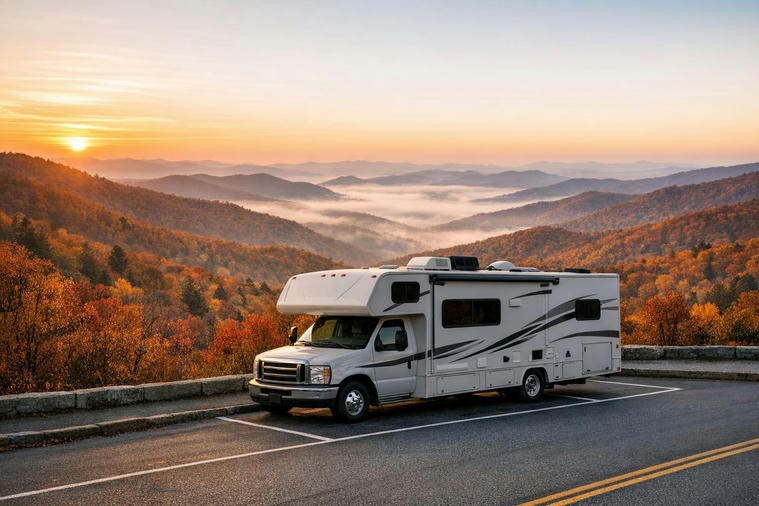
The Blue Ridge Parkway stretches about 469 miles, connecting Shenandoah National Park in Virginia with Great Smoky Mountains National Park in North Carolina. It was designed for unhurried sightseeing rather than high-speed travel, making it especially well-suited for first-time RV renters.
For official planning updates, including alerts, closures, and seasonal information, consult:
- Blue Ridge Parkway: Blue Ridge Parkway travel information
- National Park Service (BLRI): National Park Service Blue Ridge Parkway page
- North Carolina travel planning: Visit North Carolina
This guide is tailored to international visitors starting with an RV rental in Charlotte and planning a 7-day fall loop through western North Carolina. It focuses on practical routing, vehicle suitability, official campgrounds, and smart timing strategies to help you experience peak foliage without peak stress.
Why the Blue Ridge Parkway Works So Well in an RV
The Parkway is a two-lane scenic route with frequent overlooks, a clearly marked milepost system, and steady elevation changes. The National Park Service restricts most commercial through-truck traffic, preserving its recreational driving character.
For RV travelers, that means:
- Clearly signed overlooks for panoramic stops
- Scenic pacing with lower speed limits than interstates
- Multiple National Park Service campgrounds located directly on the route
- Round-trip flexibility (you can turn around or shorten days easily)
Most rental motorhomes in the Class C or smaller Class A category are appropriate for the Parkway when driven carefully. Always confirm your vehicle height and pay attention to posted tunnel clearances along the route. Before departure, review general mountain-driving guidance in the USA RV Rentals handbook and Driving in Mountain Regions Safely.
Trip Overview: 7 Days from Charlotte to the High Ridge and Back
Charlotte offers strong flight access and a wide selection of North Carolina RV rentals. From there, you will drive west to the Asheville gateway and then travel north along the Blue Ridge Parkway before looping back toward the foothills and returning to Charlotte.
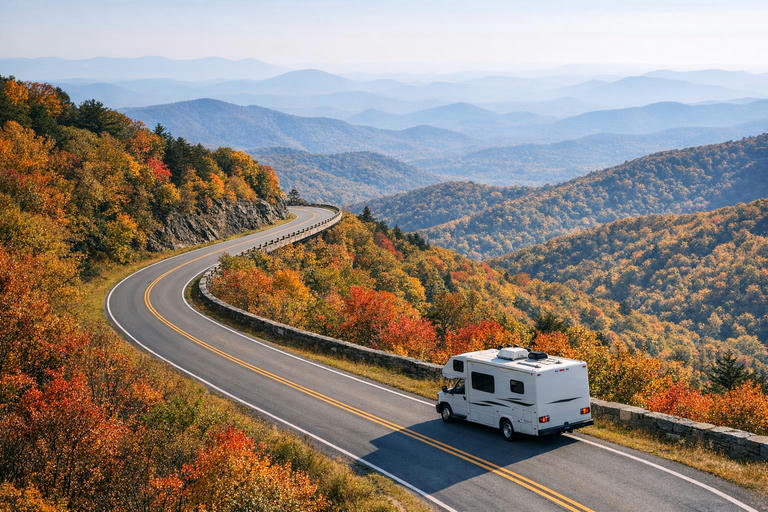
Route Logic
- Day 1: Charlotte to Asheville (gateway access)
- Days 2–3: Southern and central Parkway (Mount Pisgah and Craggy areas)
- Days 4–5: Linn Cove Viaduct, Grandfather Mountain area, Linville Falls
- Day 6: Little Switzerland and foothills transition
- Day 7: Return to Charlotte
Always check the NPS website before departure for campground status, weather advisories, and temporary road closures. Autumn weather at higher elevations can shift quickly.
7-Day Blue Ridge Parkway RV Fall Itinerary
Day 1 – Charlotte to Asheville
After collecting your RV, travel west toward Asheville, a primary Parkway access point. This first leg uses major highways, which are generally straightforward for first-time RV drivers.
Consider stopping at the Blue Ridge Parkway Visitor Center near Asheville. Confirm current hours on the NPS Blue Ridge Parkway page before you travel.
Overnight Options:
Mount Pisgah Campground (NPS) Located directly on the Parkway at higher elevation south of Asheville. When in season, reservations are typically handled through Recreation.gov. Ideal for immediate immersion in mountain scenery.
Asheville East KOA Holiday Full hookups and easy interstate access. A practical first night for international renters who want full services before moving deeper onto the Parkway.
Day 2 – Mount Pisgah and Southern Parkway Ridge
Climb into higher elevations where fall color can arrive earlier. Keep daily mileage short and stop frequently at signed overlooks.
Driving tips:
- Use lower gears on long descents
- Allow faster vehicles to pass at designated pull-offs
- Start early for clearer roads and softer light
Remain at Mount Pisgah Campground or move slightly north along the Parkway depending on availability.
Day 3 – Craggy Gardens Toward Linn Cove Viaduct
Travel north through one of the Parkway’s most photographed sections. The Linn Cove Viaduct near Grandfather Mountain is a well-known engineering feature designed to follow the contours of the mountain landscape.
Expect steady curves and several tunnels. Observe all posted clearance signage and maintain a moderate speed.
Overnight Options:
Linville Falls Campground (NPS) Located near Linville Falls trailheads. When open, campsites are typically reservable via Recreation.gov. A strategic base to reduce day-use parking stress.
Bear Den Campground A private campground near milepost 324 offering hookups and convenient Parkway access. Suitable for travelers who prefer electrical service during cooler fall nights.
Day 4 – Linville Falls Exploration Day
Stay parked and explore on foot. Linville Falls offers multiple viewpoints of the gorge and waterfall. Confirm trail conditions and accessibility via the NPS site before hiking.
Gridlock strategy:
- Walk from your campground instead of re-entering parking lots repeatedly
- Shift scenic drives to early morning or late afternoon
Spend a second night in the Linville area.
Day 5 – Grandfather Area to Little Switzerland
Continue north through dramatic ridge sections with sweeping long-range views. Elevation changes here are steady but not abrupt.
You may encounter additional tunnels. Drive cautiously, allow distance between vehicles, and use headlights where appropriate.
Overnight in or near the Little Switzerland area, positioning yourself for a gradual descent the next day.
Day 6 – Transition to the Foothills
Descend gradually toward lower elevations on the eastern side of the ridge. Fall color can linger longer at mid-elevations depending on the season.
Choose a campground that simplifies your final drive back to Charlotte. Keeping this day flexible allows you to adjust for weather or traffic conditions.
Day 7 – Return to Charlotte
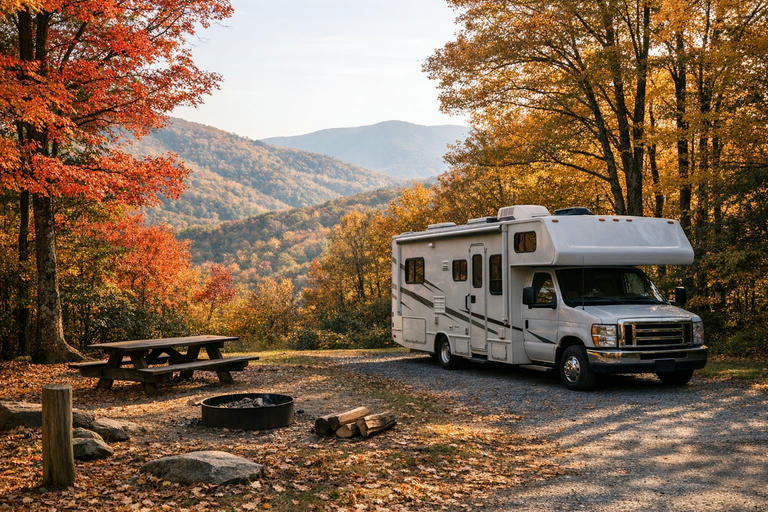
Return to Charlotte with extra time for refueling and waste tank emptying before vehicle drop-off. Autumn weekends can increase general highway traffic, so build margin before any international departures.
Where to Stay: Scenic and Practical RV Bases
On-Parkway (National Park Service)
Mount Pisgah Campground High-elevation setting directly on the Parkway. Scenic sunrise possibilities and immediate access to overlooks.
Linville Falls Campground Convenient for waterfall hikes and central ridge exploration. Reduces dependence on day-use parking areas.
Most Parkway campgrounds operate seasonally. Check opening and closing dates each year on the NPS Blue Ridge Parkway page.
Private RV Parks with Full Hookups
Asheville East KOA Holiday Practical gateway base with amenities that ease first-day adjustments.
Bear Den Campground Close to key scenic sections near Linn Cove Viaduct and Little Switzerland, with hookups suited to cooler weather travel.
Alternating between scenic NPS campgrounds and full-service private parks can balance immersion with comfort.
How to Avoid Fall Gridlock
Peak leaf season typically brings the heaviest traffic on October weekends and between late morning and mid-afternoon.
Strategies that work well in an RV:
- Stay directly on or immediately adjacent to the Parkway
- Drive early (before 9am) or later in the afternoon
- Keep daily distances short
- Favor midweek travel when possible
Because your accommodation travels with you, you do not need to compete for lodging after dark or rush to cover long distances.
Frequently Asked Questions
Are there fuel stations on the Parkway?
Are there fuel stations on the Parkway?
Fuel services are limited directly on the Blue Ridge Parkway. Plan to refuel in nearby towns before returning to higher elevations.
Do I need campground reservations in October?
Do I need campground reservations in October?
Yes. Fall foliage season is one of the busiest times of year. Reserve NPS campgrounds through Recreation.gov when open, and private parks through their official websites.
Are there height-restricted tunnels?
Are there height-restricted tunnels?
Yes. Several tunnels have posted clearance limits. Always confirm your RV height and follow posted signage.
When do campgrounds close for the season?
When do campgrounds close for the season?
Closing dates vary by campground and weather conditions. Confirm seasonal schedules on the official NPS Blue Ridge Parkway site before finalizing plans.
Is commercial truck traffic common?
Is commercial truck traffic common?
The Parkway restricts most commercial through-truck traffic under National Park Service regulations, supporting its recreational driving character.
Final Thoughts
A Blue Ridge Parkway RV fall journey is about steady pacing, layered mountain views, and evenings in cool mountain air.
By starting in Charlotte, staying near key ridge sections, and respecting elevation-driven color timing, you can enjoy one of America’s most scenic autumn drives with far less stress than day-trippers.
Let the mileposts guide your progress — and let the mountains set your rhythm.
Ready to compare USA RV rentals?
Use the compact search below to check live availability, compare motorhome options, and start shaping your route.