Boston to Acadia: Cooling-Off RV Escapes in New England
A Boston to Acadia RV trip is one of the most refreshing summer road journeys in the northeastern United States. In just a few hundred miles, you travel from historic city streets and harbor views to rocky Atlantic coastline, evergreen forests, and the scenic mountain-and-ocean landscapes of Acadia National Park.

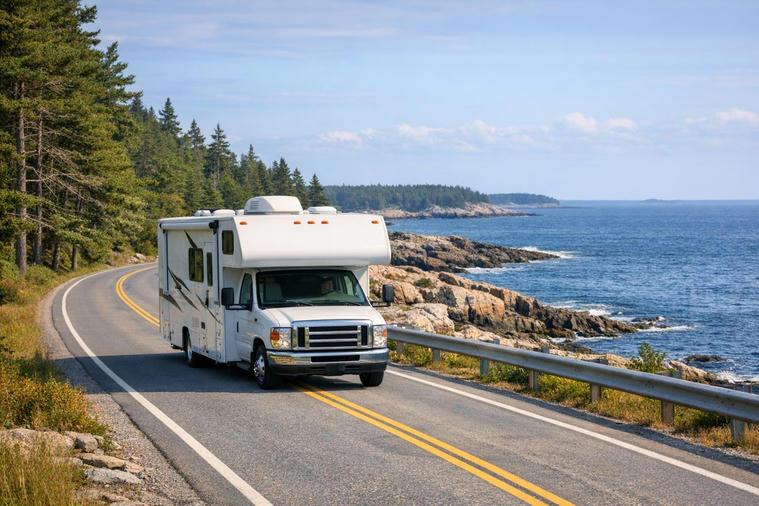
For international visitors, this route works especially well as a first RV experience in the U.S. Distances are manageable, fuel and grocery stops are frequent, and the infrastructure across Massachusetts and Maine is well signed and easy to follow. The journey blends city culture, classic New England coastal towns, and a nationally protected landscape at the end of the road.
If you’re weighing vehicle options, start with an RV rental in Boston.
For official planning details and seasonal updates, use:
- Visit Massachusetts
- Visit Maine
- Acadia National Park (National Park Service) Always confirm park alerts, campground availability, and any vehicle access requirements on official sites before departure.
Why This Trip Works for First-Time International RV Renters
This Boston to Acadia RV itinerary is ideal if you are new to driving in the United States:
- Moderate driving days (generally 2–4 hours).
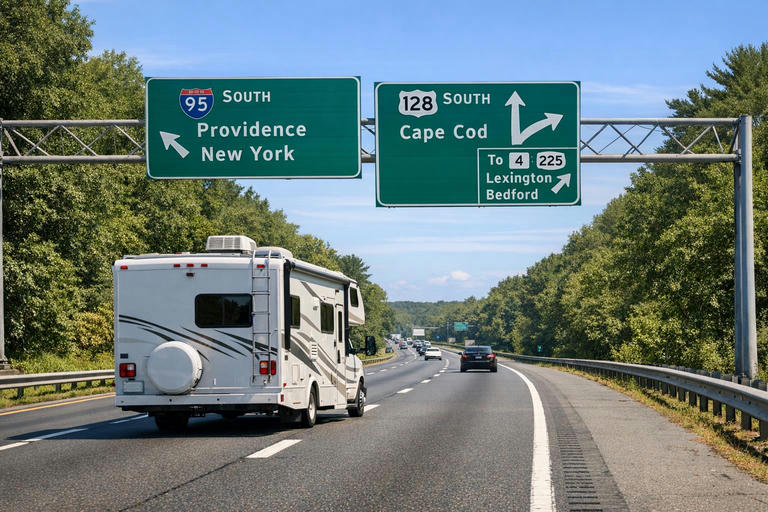
- Frequent towns with services along major highways such as I-95.
- A clearly defined end point: Acadia National Park.
- A balance of urban sightseeing and open coastal scenery.
Boston is a practical gateway with major international flight connections. Collecting your motorhome near the city and heading north allows you to gain confidence on American roads before reaching rural Downeast Maine.
Driving basics:
- Distances are posted in miles; speed limits are in miles per hour (mph).
- In Massachusetts and Maine, right turns on red are generally permitted after a full stop unless a posted sign prohibits it.
7-Day / 6-Night Boston to Acadia RV Itinerary
Approximate total driving distance: 300–350 miles (480–560 km), depending on coastal detours. Best season: Late spring through early fall, with peak demand in July and August.
Day 1 – Arrive in Boston
Overnight: Greater Boston campground
After arriving in Boston, collect your RV and avoid driving directly into the historic downtown, where streets are narrow and parking is limited for larger vehicles.
Instead:
- Base yourself at a campground outside the city.
- Use public transportation or rideshare to explore central Boston.
In the city, highlights from Visit Massachusetts include Boston Common, the Freedom Trail, and the waterfront and harbor areas.
Recommended RV base near Boston:
- Boston Minuteman Campground (Littleton, MA) Located northwest of Boston with access to major highways and commuter rail options, making it practical for visiting the city without navigating a motorhome downtown.
Day 2 – Boston to the North Shore (Massachusetts)
Overnight: North Shore state park campground
Head north along the coast toward the Massachusetts North Shore. This region is known for historic seaside towns, beaches, and maritime heritage.
For official regional inspiration and coastal highlights, see Visit Massachusetts.
Recommended RV stop:
- Salisbury Beach State Reservation (Massachusetts Department of Conservation and Recreation) This oceanfront state reservation offers a campground suitable for RVs and immediate beach access. It is a logical final Massachusetts stop before crossing into New Hampshire and Maine via I-95.
Planning notes:
- Expect heavier traffic on summer weekends.
- Use designated parking areas when exploring older town centers.
Day 3 – North Shore to Southern Maine
Overnight: Southern Maine campground
Continue north into Maine. There are no formalities at the state line; you remain on well-maintained highways such as I-95 and U.S. coastal routes.
Southern Maine features sandy beaches, rocky headlands, working harbors, and classic New England seaside architecture. Browse official trip ideas at Visit Maine. For RV travelers:
- Refuel before leaving major highway corridors.
- Anticipate Friday and Sunday congestion in peak summer.
Choose a campground with easy highway access to simplify the next day’s longer drive toward Bar Harbor.
Day 4 – Southern Maine to Bar Harbor (Mount Desert Island)
Overnight: Acadia-area campground
Drive north toward Mount Desert Island, home to Acadia National Park and the town of Bar Harbor.
As you approach Downeast Maine, the coastline becomes more rugged and forested. Final stretches may include narrower roads and slower speeds, but conditions are generally good.
Before arrival:
- Confirm campground reservations.
- Check Acadia National Park alerts.
Day 5 – Acadia National Park: Park Loop Road & Cadillac Mountain
Overnight: Same campground
Spend a full day exploring Acadia National Park.
According to the National Park Service, Acadia protects rocky headlands, forest, mountains, and miles of Atlantic shoreline on Mount Desert Island and surrounding areas.
Key experiences often include:
- Driving sections of the Park Loop Road (check vehicle suitability and restrictions on the NPS site).
- Ocean viewpoints along the rocky shoreline.
- Hiking trails ranging from gentle walks to steeper climbs.
- Cadillac Mountain, one of the highest points on the U.S. East Coast.
Important: Vehicle reservations are required to drive the Cadillac Summit Road during the main season. Reservations are handled through Recreation.gov, as detailed on the official NPS Cadillac Mountain page.
Large RV note:
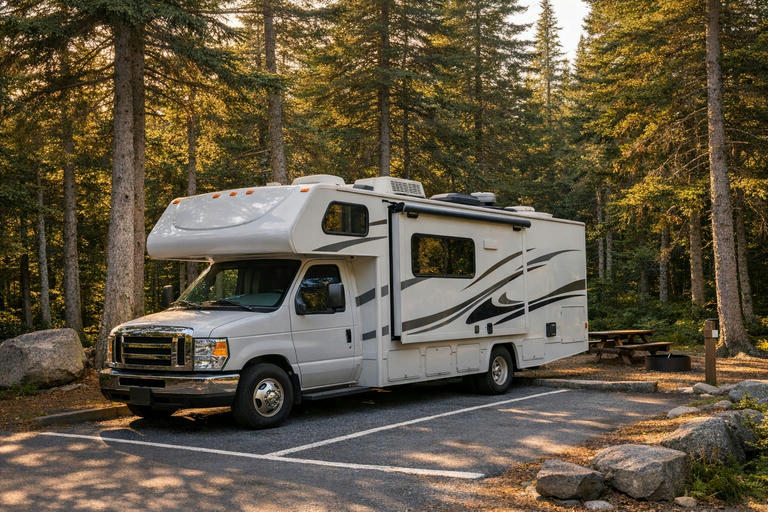
- Not all parking areas within the park can accommodate longer motorhomes.
- Arrive early in peak summer.
- Follow posted length and vehicle guidance on the NPS website.
Day 6 – Schoodic Peninsula or Carriage Roads
Overnight: Same base
Use this day for either deeper exploration of Mount Desert Island or a drive to the Schoodic Peninsula, which is also part of Acadia National Park and managed by the National Park Service.
The Schoodic area offers dramatic rocky shoreline and a more remote feel while remaining within the park boundary (see the official park map and information on Acadia National Park).
Alternative: Explore Acadia’s historic carriage roads (non-motorized use) on foot or by bicycle, as described by the NPS.
Watch for:
- Cyclists and pedestrians.
- Foggy coastal mornings that can reduce visibility.
Day 7 – Return Toward Boston (Inland Route)
Overnight: Near Boston (if flying next day)
For your return, consider a more direct inland highway route using I-95 to reduce travel time.
Plan ahead:
- Allow buffer time for Greater Boston traffic.
- Refuel according to your rental agreement.
- Empty gray and black water tanks at a designated dump station before return if required.
Staying outside central Boston on your final night reduces stress before vehicle drop-off and your departure flight.
Where to Stay: Official & Practical RV Bases
Always check opening dates, maximum RV lengths, and site availability before booking.
Greater Boston
- Boston Minuteman Campground (Littleton, MA) Practical highway access and a logical base for visiting Boston without driving a large RV into the historic core.
Massachusetts North Shore
- Salisbury Beach State Reservation (DCR) Oceanfront state reservation with RV camping and quick access to I-95 for the drive into Maine.
Acadia National Park (NPS)
All three primary campgrounds are reservable through Recreation.gov and detailed on the official NPS website:
- Blackwoods Campground Acadia camping information Located on Mount Desert Island with access to Park Loop Road. Suitable for smaller to mid-size RVs; confirm length limits on NPS/Recreation.gov before booking.
- Seawall Campground Acadia camping information On the western side of Mount Desert Island, offering a quieter setting near the coast. Check vehicle size limits in advance.
- Schoodic Woods Campground Acadia camping information Located on the Schoodic Peninsula section of Acadia National Park, offering a more separated setting from Bar Harbor. Review site length details and reservation rules via Recreation.gov.
Summer Planning Tips
Weather
Coastal New England summers are generally warm but moderated by the Atlantic Ocean. Expect changeable conditions and occasional fog along the Maine coast.
Reservations
July and August are peak months for:
- Acadia campgrounds.
- Coastal Maine private RV parks.
- Cadillac Summit Road vehicle reservations.
Book as early as possible for summer travel.
Frequently Asked Questions
Do I need a reservation to drive Cadillac Summit Road?
Do I need a reservation to drive Cadillac Summit Road?
Yes. During the main season, the National Park Service requires vehicle reservations for Cadillac Summit Road. Details and booking links are provided on the official Acadia National Park website and through Recreation.gov.
What size RV can I bring to Acadia campgrounds?
What size RV can I bring to Acadia campgrounds?
Each campground — Blackwoods, Seawall, and Schoodic Woods — has specific site length limits. Always verify maximum vehicle lengths and site details on Recreation.gov and the official NPS camping page before booking.
Are there toll roads between Boston and Maine?
Are there toll roads between Boston and Maine?
Portions of I-95 in Maine include toll facilities operated by the Maine Turnpike Authority. Check official Maine transportation resources before travel and confirm how your rental company handles toll payments.
When is the best time to avoid peak summer crowds?
When is the best time to avoid peak summer crowds?
Late spring and early fall typically see fewer visitors than July and August. Always review current visitation guidance and alerts on Visit Maine and the Acadia National Park website.
Is a Boston to Acadia RV Trip Right for You?
Choose this route if you want:
- A cooler coastal alternative to hotter inland U.S. summer destinations.
- A balanced mix of city history, beaches, fishing harbors, and national park scenery.
- A manageable first RV experience with moderate daily distances.
Start planning your Boston to Acadia RV adventure with an RV rental in Boston, and use official resources from Visit Massachusetts, Visit Maine, and Acadia National Park to confirm the latest travel details before you go.
Ready to compare USA RV rentals?
Use the compact search below to check live availability, compare motorhome options, and start shaping your route.