Colorado Front Range Weekenders: 7 Bookable Lakes Within Two Hours of Denver
Denver lakes RV camping is one of the simplest ways to begin a Rocky Mountain trip. Within about two hours of downtown, several large reservoirs and state recreation areas offer reservable campgrounds, boat access, and designated day-use areas. For first-time renters, this means manageable highway drives, established facilities, and the ability to stay close to services.

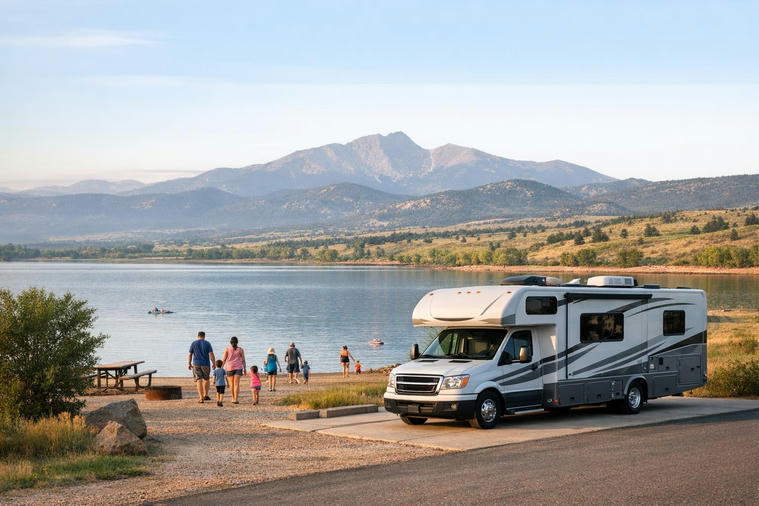
All seven lakes in this guide are reservable online through Colorado Parks & Wildlife (CPW) at Colorado Parks & Wildlife. According to CPW, camping reservations for Colorado state parks are made through its official reservation system, and a valid parks pass is required in addition to camping fees. For broader statewide inspiration, you can also review the Colorado Tourism Office at Colorado Tourism Office.
If you are flying into Colorado, start with an RV rental in Denver (RV rental in Denver). Staying at a nearby lake your first night keeps driving short while you get comfortable with your motorhome.
How the Front Range Lakes Are Laid Out
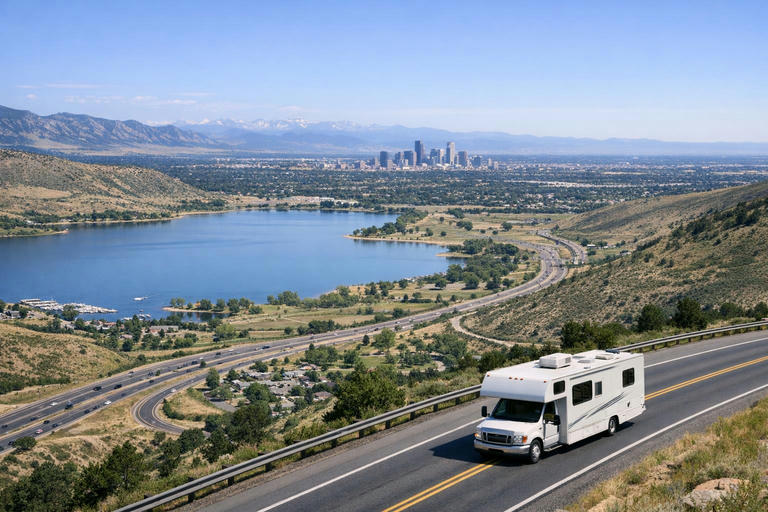
Denver sits where the Great Plains meet the Rocky Mountain foothills. The seven destinations below form a loose ring around the city, primarily connected by Interstate 25, C-470, and other multi-lane highways.
South and southeast of Denver
- Chatfield State Park
- Cherry Creek State Park
North toward Loveland and Fort Collins
- Boyd Lake State Park
- Horsetooth Reservoir
- Carter Lake
West in the foothills
- Golden Gate Canyon State Park
South near Pueblo
- Lake Pueblo State Park
State parks in Colorado are managed by Colorado Parks & Wildlife. Horsetooth Reservoir and Carter Lake are in Larimer County and are managed at the county level; reservations and official regulations are provided through their respective managing authorities linked from official Colorado tourism and government resources. Confirm details on the official park or county page before booking.
A 7-Day / 6-Night Front Range Lake Loop
This loop keeps most daily drives between about 45 minutes and two hours using major highways. Times are approximate and assume normal summer traffic.
Day 1 – Arrive in Denver → Chatfield State Park
Where to stay: Chatfield State Park Campground (Colorado Parks & Wildlife) Reserve through the official CPW system at Colorado Parks & Wildlife.
Why this stop works: Chatfield is one of the closest large state park reservoirs to Denver. According to CPW, the park offers camping and boating access, making it a practical first-night base after arrival. Proximity to Littleton and south Denver means straightforward access to fuel and groceries before settling in.
Activities: The park provides boating, fishing, and designated swim areas as listed on the official park page. Always follow posted guidance on water conditions and seasonal operations.
Day 2 – Chatfield → Cherry Creek State Park
Where to stay: Cherry Creek State Park Campground (Colorado Parks & Wildlife) Book via Colorado Parks & Wildlife.
Why this stop works: Cherry Creek State Park sits on the southeast edge of Denver. CPW confirms camping and water recreation access here, making it ideal if you want quick city access without driving your motorhome into the urban core. Leave the RV set up and use rideshare to visit museums or neighborhoods in Denver.
Activities: The official park description notes boating, fishing, and swimming opportunities in designated areas, as conditions allow.
Day 3 – Cherry Creek → Boyd Lake State Park (Loveland)
Where to stay: Boyd Lake State Park Campground (Colorado Parks & Wildlife) Reservable through Colorado Parks & Wildlife.
Why this stop works: Located just east of the foothills near Loveland, Boyd Lake State Park is identified by CPW as offering camping and a large reservoir for boating and water-based recreation. Staying here keeps you close to supermarkets and services in Loveland while introducing wider views of the northern Front Range.
Activities: Boating, fishing, and shoreline access as described on the official park page. Check the CPW listing for current swim-area information and seasonal operations.
Day 4 – Boyd Lake → Horsetooth Reservoir (Larimer County)
Where to stay: Horsetooth Reservoir Campgrounds (Larimer County) Confirm official camping and reservation details via the managing authority linked from Colorado’s official tourism and government resources before booking.
Why this stop works: Horsetooth Reservoir sits directly west of Fort Collins along the foothills. The official managing authority confirms that camping and boating facilities are available around the reservoir. This setting offers more pronounced hillside terrain while remaining close to city services.
Road guidance: Access roads around the reservoir follow the shoreline and can include curves and elevation changes. Plan to arrive in daylight, use designated pullouts where provided, and observe posted length limits for campsites.
Day 5 – Horsetooth → Carter Lake
Where to stay: Carter Lake Campgrounds (Larimer County) Check the official Larimer County Natural Resources page for Carter Lake campground reservations and site-specific regulations.
Why this stop works: Carter Lake is managed by Larimer County and is identified by county resources as a site for boating, fishing, and camping. Compared to parks bordering metro Denver, it generally feels more secluded, while still remaining under two hours from the city.
Planning notes: Review maximum vehicle length limits and hookup availability directly on the official campground page. Not all sites offer the same amenities.
Day 6 – Carter Lake → Golden Gate Canyon State Park
Where to stay: Golden Gate Canyon State Park Campground (Colorado Parks & Wildlife) Reservations through Colorado Parks & Wildlife.
Why this stop works: Golden Gate Canyon State Park, west of Golden, is described by CPW as providing camping, hiking, and mountain scenery. While it is not centered on a large reservoir like the other stops, it adds a classic foothill and forest experience to your Front Range loop.
Road guidance: Expect mountain-style driving with grades and curves typical of foothill highways. Observe posted speed limits and check site length restrictions in advance.
Day 7 – Golden Gate Canyon → Lake Pueblo State Park → Denver
Where to stay (optional extra night): Lake Pueblo State Park Campgrounds (Colorado Parks & Wildlife) Reserve via Colorado Parks & Wildlife.
Why this stop works: Lake Pueblo State Park is one of Colorado’s largest state park reservoirs. CPW confirms camping and boating facilities, and summer temperatures are typically warmer than at higher-elevation parks. If your flight departs the next morning, consider returning to a Denver-area park instead to shorten your final drive.
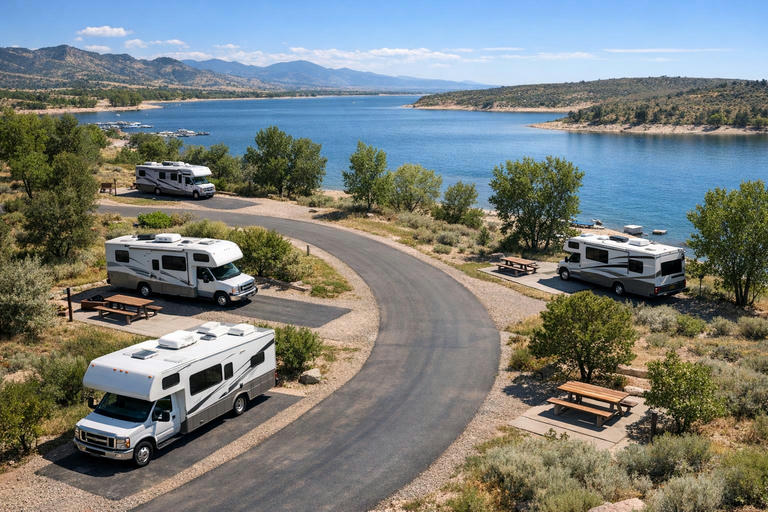
Booking Strategy for Summer Long Weekends
Summer is peak season for Denver lakes RV camping, particularly from late May through early September.
Reservations According to Colorado Parks & Wildlife, camping at state parks should be reserved in advance through the official CPW reservation system. Holiday weekends often book early.
Pass requirements CPW states that a valid parks pass is required for vehicle entry in addition to camping reservations. Confirm current rates and rules directly on the CPW website before travel.
Hookups and site selection Amenity availability (such as electric hookups or dump stations) varies by park and by campground loop. Always consult the specific park’s official page and campsite description for current details before confirming your reservation.
Vehicle length limits Each campsite lists a maximum vehicle length. If you are new to RV driving, select a site that clearly matches or exceeds your overall vehicle length and review arrival instructions in advance.
Practical Driving Tips for First-Time Renters
Highways The main connectors between these lakes—Interstate 25, C-470, and E-470—are multi-lane highways with clear signage. Stay in the right lanes except when passing.
Altitude Denver sits at approximately 5,280 feet (1,609 meters) above sea level. Higher elevations in the foothills can increase sun exposure and affect how quickly you feel fatigued. Hydrate regularly.
City access Avoid taking large motorhomes into central Denver for sightseeing. Camp at Cherry Creek or Chatfield and use rideshare or local transport options instead.
Mountain travel extension If you plan to extend beyond the Front Range into higher mountain passes, review the handbook hub at How It Works and the detailed guide RV Travel in the Rocky Mountains (RV Travel in the Rocky Mountains).
For a broader search beyond Denver, explore Colorado RV rentals (Colorado RV rentals).
Frequently Asked Questions
Do I need advance reservations in summer?
Do I need advance reservations in summer?
Yes. Colorado Parks & Wildlife advises reserving campsites in advance, especially for summer weekends and holidays. Availability can be limited at high-demand parks near Denver.
Are hookups available at these lakes?
Are hookups available at these lakes?
Some state park campgrounds offer campsites with electric service, but availability varies by location and loop. Check the official park page for the specific campground you are booking to confirm current hookups and utility details.
Who manages Horsetooth and Carter Lake?
Who manages Horsetooth and Carter Lake?
Horsetooth Reservoir and Carter Lake are managed by Larimer County rather than CPW. Always use the official managing authority’s reservation and regulation pages to confirm campsite details and boating rules.
Can I swim in these reservoirs?
Can I swim in these reservoirs?
Several of these parks list swimming among permitted activities in designated areas, but water levels, seasonal closures, and safety conditions can change. Follow posted signs and official advisories at each park.
Short Drives, Real Lake Time
What makes Denver lakes RV camping appealing is proximity. You can land at Denver International Airport, collect your motorhome, and reach a reservable lakeside campground in under an hour in some cases.
By booking through Colorado Parks & Wildlife or the relevant official managing authority and keeping daily drives modest, the Front Range offers one of the most first-time-friendly RV regions in the Mountain West.
Ready to compare USA RV rentals?
Use the compact search below to check live availability, compare motorhome options, and start shaping your route.