First-Timer’s RV Packing List with State Park Rules Links
Packing for a first RV trip is easier when you separate what the rental operator supplies from what you need to bring. This RV packing checklist is designed for international visitors collecting a self-propelled RV in Denver and preparing for a Colorado long weekend.

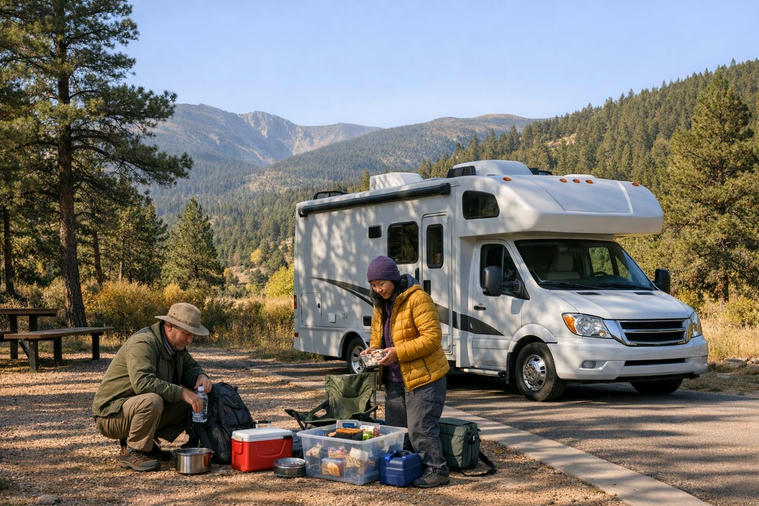
Use it to prepare for the vehicle handover, avoid duplicate purchases, confirm campsite suitability and find official park information. Save the checklist offline or print it before departure.
Before packing: complete the RV handover checklist
Do not buy bedding, kitchen equipment, tools or vehicle accessories until you know what the operator provides. During collection, ask for a demonstration of the RV’s systems and record the answers somewhere accessible.
Confirm these details before departure:
- Supplied inventory: Check bedding, towels, cookware, tableware, cleaning supplies, power cables, water hoses, leveling equipment, wheel chocks and emergency equipment.
- Vehicle dimensions: Record the exact height, length and width, including rooftop equipment and mirrors. Keep the measurements near the driver’s seat.
- Fuel: Confirm the fuel type, filler location and return requirements.
- Tanks: Ask for the fresh-water, gray-water and black-water capacities. Learn how to read the indicators and identify each connection.
- Electrical system: Locate the shore-power connection and supplied cable. Ask which appliances work when the RV is not connected to electricity.
- Onboard fuel: Ask the operator to demonstrate relevant shut-off controls and explain rental-agreement restrictions.
- Roadside assistance: Save the telephone number and confirm what to do after a breakdown, damaged tire, warning light or collision.
- Winter equipment: Ask what is supplied, permitted or prohibited. Do not buy or install tire chains or other traction equipment without the operator’s approval.
- Operator rules: Check mileage limits, unpaved-road restrictions, permitted drivers, pet conditions and prohibited destinations.
- Driver documents: Confirm what the operator requires. Carry your home-country license and passport, plus an International Driving Permit if required for your circumstances.
Photograph the RV’s condition and supplied inventory before leaving. Ask questions while depot staff are available rather than trying to identify an unfamiliar connection at a campground.
First-timer’s RV packing checklist
Documents and bookings
- Passport and required driving documents
- Rental agreement and insurance information
- Roadside-assistance instructions
- Campsite confirmations and check-in details
- Travel or health-insurance documents
- Payment cards and a small amount of US currency
- Offline copies of important bookings
- Written RV dimensions and emergency contacts
Keep essential documents in a waterproof folder. Store digital copies separately from the originals.
Clothing and personal items
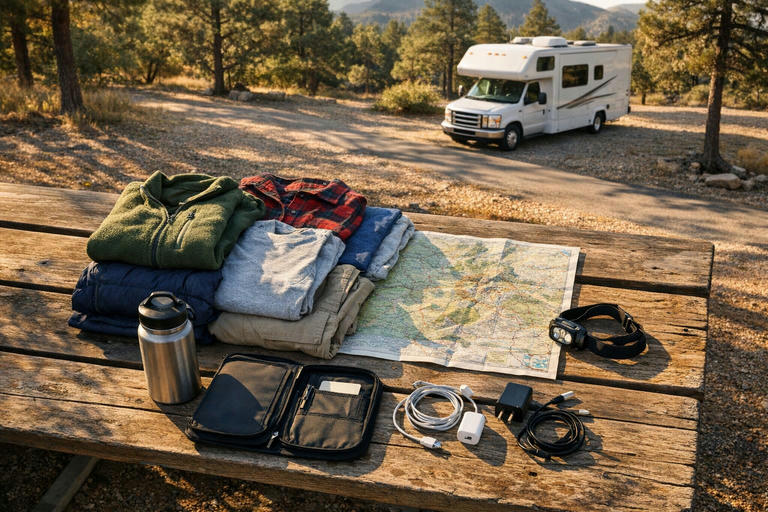
Colorado conditions can differ by location, elevation and season. Pack layers instead of relying on one heavy outfit.
- Waterproof outer layer
- Warm mid-layer, hat and gloves
- Comfortable walking shoes
- Sleepwear suitable for cool nights
- Sun hat, sunglasses and sunscreen
- Refillable water bottle
- Prescription medicine in its original labeled packaging
- Compact first-aid kit
- Insect repellent when appropriate
Call 911 in an emergency and seek qualified medical help for health concerns.
Kitchen and food
Check the supplied inventory first. If necessary, consider packing or buying:
- One pot and one frying pan compatible with the RV kitchen
- Plates, bowls, cups and cutlery
- Cutting board and small food-preparation knife
- Can opener and bottle opener
- Dish soap, sponge and tea towel
- Reusable containers or resealable bags
- Simple meals that fit the available refrigerator and storage space
- Drinking water for the first day
Do not bring an outdoor stove or fuel canister unless the rental operator permits it and you have checked the campground’s current fire and cooking rules. Never operate outdoor cooking equipment inside the RV.
Bedding and daily comfort
- Bedding that matches the actual bed dimensions, if not supplied
- Pillows and a warm blanket
- Quick-drying towels
- Earplugs and a sleep mask
- Camp chairs, if not supplied and storage allows
- Small doormat to reduce dirt inside the RV
Power, lighting and navigation
- Mobile phone and charging cables
- US-compatible plug adapter for personal electronics
- Power bank
- Headlamp or flashlight with spare batteries
- Downloaded maps for the planned area
- Paper map as a backup
Do not assume every campsite has an electrical hookup or reliable mobile service. Review the description of the individual site before booking. Avoid high-wattage personal appliances unless the operator confirms that the RV’s electrical system can support them.
Cleaning and wastewater
- Paper towels or washable cleaning cloths
- Operator-approved cleaning product
- Small trash bags
- Toilet paper approved by the operator
- Disposable gloves for wastewater connections
- Hand sanitizer
Ask for a demonstration before operating the black- or gray-water system. Empty tanks only at a designated facility and follow posted instructions. Verify dump-station availability on the park or campground page before traveling.
Items to leave at home unless approved
These items may already be supplied or may conflict with the rental agreement:
- Fuel cans
- Portable generators
- Propane cylinders or fuel canisters
- Tire chains or vehicle-mounted traction equipment
- Jump starters, jumper cables or repair tools
- Heavy leveling systems
- Large outdoor appliances
- Firewood brought from another area
If a warning light appears or the RV develops a mechanical problem, follow the operator’s roadside-assistance process instead of attempting a repair.
How to check Colorado park and campground rules
Use the official Colorado Parks and Wildlife rules and regulations as a starting point. You must also open the page for the specific park and campground because access, alerts, facilities and operating conditions can vary.
For a national park stay, consult the National Park Service camping guide, then review the selected park’s official camping, alerts and regulations pages.
Before every stay, verify:
- Check-in time and after-hours procedure
- Maximum vehicle length and individual site dimensions
- Electrical, water and sewer connections, if listed
- Generator restrictions and quiet hours
- Pet requirements
- Current fire restrictions and cooking rules
- Food and trash storage requirements
- Fresh-water and dump-station availability
- Road closures, weather notices and park alerts
A reservation does not guarantee that every RV will fit the site. Compare the site description with the dimensions recorded during handover. If the booking page does not provide enough detail, contact the park before arrival.
Recommended RV bases near Denver
These named state parks provide official pages where travelers can review camping information, alerts and reservation access. They may suit the beginning or end of a Denver-based trip, but availability and RV fit must be checked for the selected dates and site.
Cherry Creek State Park
Cherry Creek State Park is a practical place to investigate for a formal state-park stay associated with a Denver arrival or departure. Use the park’s camping and reservation information to confirm operating dates, access and site fit.
Chatfield State Park
Chatfield State Park can help first-time renters plan a formal campsite before or after traveling beyond Denver. Confirm that the selected site accommodates the RV’s complete length and provides any connection you require.
Golden Gate Canyon State Park
Golden Gate Canyon State Park provides official camping information for travelers considering a stay beyond Denver’s urban surroundings. Compare the access route and campsite description with the RV’s dimensions and the rental agreement before booking.
Reserve the first night before collecting the RV. Plan groceries and supplies before settling into camp, especially if moving the RV would require disconnecting campsite equipment.
Road and seasonal checks
Check official Colorado road conditions and travel alerts before leaving the depot or campground. Use only routes permitted by the rental agreement and suitable for the RV’s recorded height, width, length and weight restrictions.
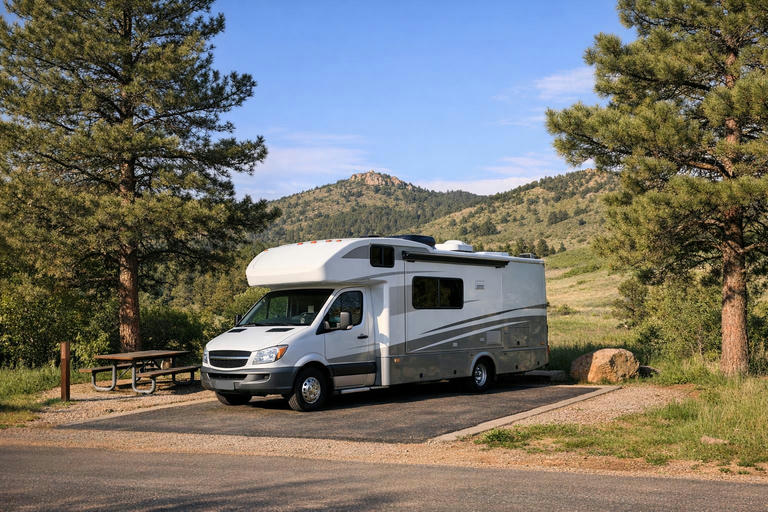
An RV needs more room for braking, turning and parking than a car. Watch for posted clearance, length and weight limits. Avoid entering a confined parking area if you are uncertain that there is enough room to turn around. In winter, check current road requirements and the operator’s equipment policy before departure.
Final check before you drive
- Every passenger is seated and belted
- Cupboards, refrigerator and interior doors are latched
- Loose objects are stored
- Steps and awnings are retracted
- Power, water and wastewater connections are disconnected
- Exterior compartments are closed
- The campsite is clear of trash and personal items
- Mirrors are adjusted
- Fuel level and route are checked
- RV height and width are visible to the driver
Frequently Asked Questions
What documents should an international visitor bring to collect an RV in Denver?
What documents should an international visitor bring to collect an RV in Denver?
Bring your passport, home-country driver’s license and every document requested by the rental operator. Ask the operator whether an International Driving Permit or any additional license documentation is required. Keep the rental agreement, insurance details and roadside-assistance instructions accessible during the trip.
Can I arrive at a Colorado state park without a campsite reservation?
Can I arrive at a Colorado state park without a campsite reservation?
Do not assume a suitable site will be available. Check the selected park’s official page for reservations, operating conditions and arrival procedures. Booking ahead is particularly important for the first night, when you are still learning the RV’s systems.
How do I know whether an RV will fit a campsite?
How do I know whether an RV will fit a campsite?
Record the RV’s full length, width and height during handover. Compare those measurements with the individual campsite description, not merely the campground name. If dimensions or access details are unclear, contact the park before booking.
Can I bring a camp stove, fuel canister or firewood into a Colorado state park?
Can I bring a camp stove, fuel canister or firewood into a Colorado state park?
Only bring equipment permitted by the rental operator, and check the selected park’s current fire, cooking and resource-protection rules. Restrictions can change. Do not transport firewood from another area without first confirming current official guidance, and never use outdoor cooking equipment inside the RV.
For additional rental preparation, review how USA RV rentals work and the Colorado RV rules guide. Travelers can also compare RV rentals in Denver with Colorado RV rentals. Always verify current road, park and campground requirements on the relevant official government pages before traveling.
Ready to compare USA RV rentals?
Use the compact search below to check live availability, compare motorhome options, and start shaping your route.