Lake Tahoe RV Basecamp: Trailheads, Boat Ramps, and High-Altitude Campgrounds
Lake Tahoe RV camping combines alpine hiking, clear mountain water, and well-developed public campgrounds managed by the USDA Forest Service. For international visitors, it’s also one of the most approachable “mountain” RV trips in the American West—if you plan around elevation, peak-season demand, and the right shoreline base.

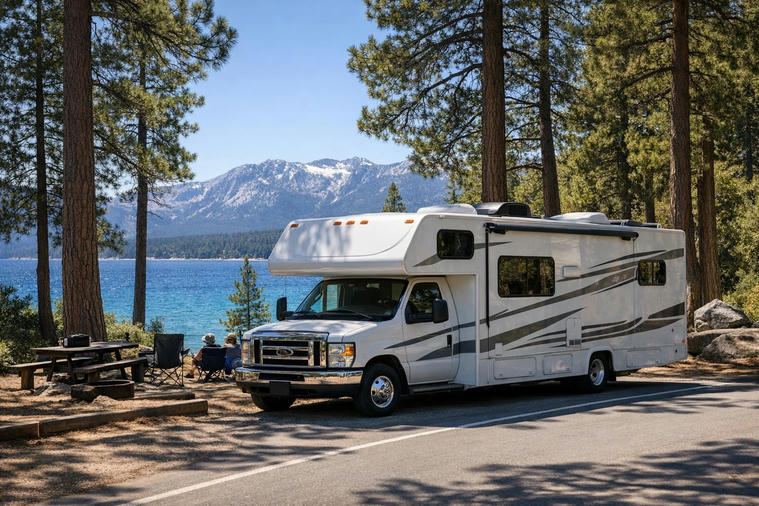
Most campgrounds, trailheads, and recreation sites in the basin are managed by the USDA Forest Service’s Lake Tahoe Basin Management Unit (LTBMU). Official recreation and campground reservations are handled through Recreation.gov, and destination planning information is available via Visit Lake Tahoe.
This guide focuses on practical logistics: where to camp with an RV, which officially designated trailheads and boat ramps to target, and how to use Reno as your gateway city.
Why Start with Reno?
If you’re flying in, collecting your RV in Reno keeps the first day simple. Reno-Tahoe International Airport is a major regional hub, and Reno provides full city services—supermarkets, gear stores, fuel, and wide roads that are easier to navigate on your first day in a motorhome.
From Reno, highways connect directly into the Lake Tahoe Basin on the Nevada side, including access toward Incline Village (north/east shore) and south toward Stateline and South Lake Tahoe.
Start with an RV rental in Reno to simplify airport transfers and vehicle pickup:
RV rental in Reno is the practical pickup option for this route. Always confirm current road and recreation conditions through:
Understanding Lake Tahoe’s Elevation
Lake Tahoe sits at approximately 6,225 feet (1,897 m) above sea level, according to official basin information. That elevation shapes your trip.
What this means in summer:
- Cool nights: Even in July and August, evenings are cold compared to low-elevation desert cities.
- Strong sun: UV intensity is higher at altitude—carry sun protection.
- Hydration matters: Drink more water than you would at sea level.
- Moderate effort hikes can feel harder the first 24–48 hours.
Arriving in Reno for your first night gives you time to adjust before sleeping at full elevation around the lake.
Where to Stay: High-Altitude Campgrounds in the Basin
Most developed RV camping around the lake is within national forest lands managed by the LTBMU. Many sites require advance reservations through:
Recreation.gov Summer is peak season, and lakeside or centrally located campgrounds book early.
North Shore and West Shore Options
- Nevada Beach Campground (near Stateline, NV) Managed by the Forest Service and reservable via Recreation.gov, Nevada Beach Campground offers forested sites and walkable shoreline access on the east shore. It’s a strong choice for first-timers because access roads are straightforward and you’re close to services in Stateline and South Lake Tahoe.
- Zephyr Cove Resort Campground (Nevada side) Located on the southeast shore, Zephyr Cove provides lake access and proximity to a large marina and beach area. This is practical if water activities are a top priority and you want direct shoreline positioning.
- Fallen Leaf Campground (near South Lake Tahoe) Managed by the Forest Service near Fallen Leaf Lake, just south of the main Tahoe shoreline, this campground provides a quieter forest setting with access to trail networks. Check site length limits carefully when reserving.
- Meeks Bay Campground (west shore, CA) Also within the national forest system and reservable via Recreation.gov, Meeks Bay offers shoreline access and is well positioned for exploring the west shore and nearby trailheads.
When choosing a campground, filter by:
- Maximum RV length (match this to your confirmed rental)
- Paved or level parking pads
- Proximity to your priority shore (north/east vs south/west)
- Direct trail or beach access
Trailheads and Official Recreation Areas
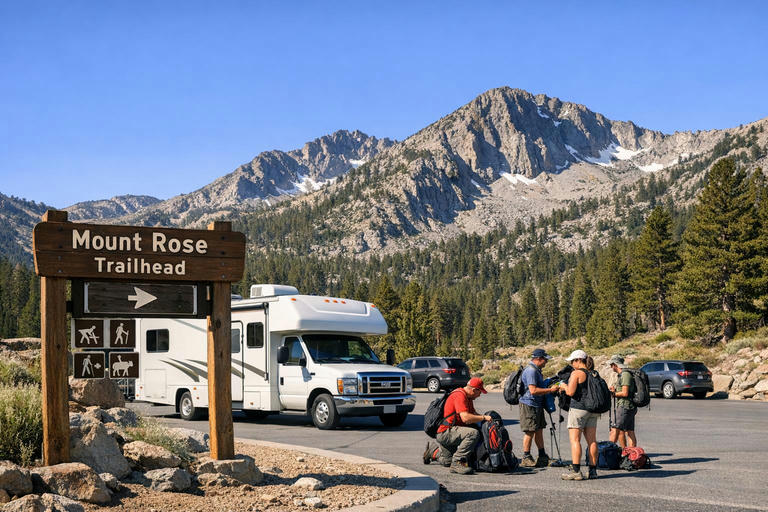
The Lake Tahoe Basin Management Unit maintains dozens of signed and mapped trailheads. Always use official listings to confirm parking layout and seasonal notes.
Key official trail and recreation areas to consider:
Mount Rose Trailhead (Nevada side)
Accessed from the Mount Rose area above Incline Village, this high-elevation trail system is known for alpine scenery and panoramic views. Parking is designated and signed. Because this is a popular trailhead, arrive early if traveling in a larger motorhome.
Spooner Lake and Backcountry Area
Managed by Nevada State Parks (separate from the Forest Service but within the Tahoe region), Spooner Lake provides developed parking, restrooms, and access into longer backcountry routes. It’s one of the more structured access points on the east side of the basin.
Taylor Creek Visitor Area (south shore)
Located near Camp Richardson and Fallen Leaf Lake, Taylor Creek includes boardwalk-style interpretive trails and a visitor contact station. Parking is organized but can fill quickly in peak summer.
Van Sickle Bi-State Park (Stateline area)
With trail access climbing above the south shore casinos area, this park provides clearly signed entry points near the Nevada–California border, useful if you’re based at Nevada Beach or Zephyr Cove.
Important for RV users:
- Do not assume every roadside pullout is legal parking for motorhomes.
- Use designated recreation parking lots.
- If space is tight, consider campground-to-trail direct walking access where possible.
Boat Ramps and Water Access
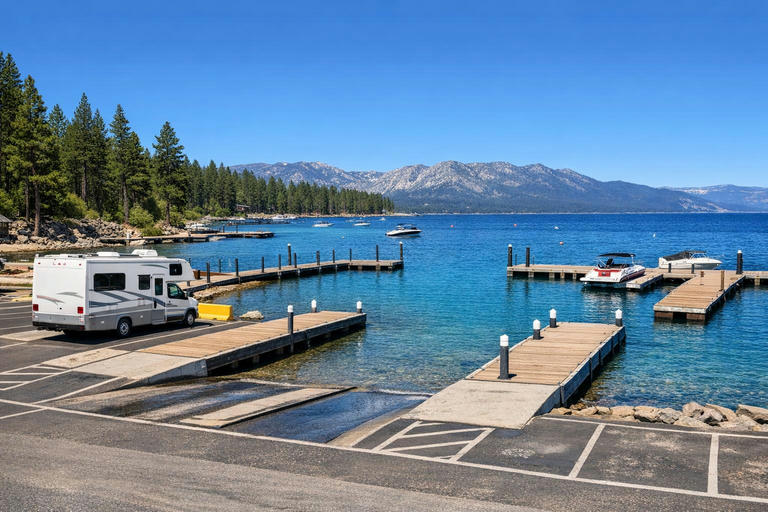
Lake Tahoe has multiple officially managed boat launch facilities and marinas around the shoreline. Because Tahoe is known for protecting its clarity, boating is regulated and inspection requirements may apply.
Confirmed public access locations include:
Cave Rock Boat Ramp (Nevada side)
Managed within the Lake Tahoe Nevada State Park system, Cave Rock provides a concrete launch ramp, designated parking, and lake access on the eastern shore.
Zephyr Cove Marina
On the southeast shore, this developed marina area includes boat launching and watercraft services.
Before planning to launch a boat, always verify:
- Current inspection requirements for watercraft
- Parking configuration (separate trailer space is typically required)
- Seasonal operating dates and opening hours
If you are renting a self-contained motorhome without a separate tow vehicle, logistics matter. Launching a trailered boat can be complex. Many first-time international visitors find it simpler to:
- Rent kayaks or paddleboards locally
- Book a marina-based excursion
- Choose a campground with walkable beach access instead of relying on ramps
Driving Considerations in the Basin
Highways around Lake Tahoe are paved and clearly marked, but they are true mountain roads.
Expect:
- Two-lane sections hugging the shoreline
- Steady climbs and descents
- Congestion on summer weekends
Practical advice for first-time RV drivers:
- Fuel in Reno or larger towns before driving into more remote stretches.
- Use lower gears on long descents if instructed during your RV orientation.
- Allow extra time—this is not a high-speed destination.
- Respect posted parking and stopping regulations at scenic areas.
For additional regional context, review RV Travel in the Southwest Arizona Utah Nevada:
How Many Nights Do You Need?
For most international travelers, 3–4 nights at a Lake Tahoe campground works well within a broader western U.S. itinerary.
A simple structure:
- Day 1: Arrive Reno, collect RV, overnight in the city area.
- Day 2: Drive to Lake Tahoe Basin campground, settle in.
- Day 3: Hiking from a designated trailhead (for example Mount Rose area or Taylor Creek).
- Day 4: Lake-focused day—marina visit, beach access, or paddle rental.
- Day 5: Return to Reno or continue onward.
This pacing gives you both alpine hiking and water time without constantly relocating your motorhome.
Summer Booking Strategy
Lake Tahoe is firmly a peak-season destination.
Plan ahead for:
- RV rental availability in Reno
- Campground reservations through Recreation.gov
- Late June through August demand and holiday weekends
Book your RV first. Once you know your confirmed vehicle length, secure campground sites that meet that limit.
Frequently Asked Questions
Do I need reservations for summer RV camping at Lake Tahoe?
Do I need reservations for summer RV camping at Lake Tahoe?
Yes. Most developed national forest campgrounds in the basin are reservable through Recreation.gov and fill quickly in summer.
Is it difficult to drive a motorhome around Lake Tahoe?
Is it difficult to drive a motorhome around Lake Tahoe?
Roads are paved and maintained, but they include mountain grades and two-lane sections. Drive conservatively and allow time.
Can I camp right on the water?
Can I camp right on the water?
Some campgrounds and recreation areas provide near-shore or beach-access sites, but true “direct waterfront” RV sites are limited and book early.
Can I launch a boat with my rental motorhome?
Can I launch a boat with my rental motorhome?
This depends on the vehicle type and parking configuration at the ramp. Separate trailer parking is typically required. Many visitors opt for on-site marina rentals instead.
Is Lake Tahoe suitable as my first high-altitude RV stop?
Is Lake Tahoe suitable as my first high-altitude RV stop?
Yes, provided you plan for cooler nights, hydrate properly, and avoid over-scheduling physically demanding hikes on your first day at elevation.
Lake Tahoe as a Practical Basecamp
Lake Tahoe RV camping works best when you treat it as a structured basecamp rather than a place to move nightly. Choose your shoreline strategically—north/east for Incline Village and Mount Rose access, south for Taylor Creek and marina clusters, west for Meeks Bay and quieter forest stretches—and reserve early.
Using Reno for pickup keeps logistics simple, especially after a long flight. From there, a well-chosen campground becomes your high-altitude home base for trails, marinas, and alpine lake days.
Ready to compare USA RV rentals?
Use the compact search below to check live availability, compare motorhome options, and start shaping your route.