Montana & Wyoming Gateway Towns: RV Launchpads for Yellowstone & Grand Teton
Planning your Yellowstone Grand Teton RV base is one of the smartest decisions you can make — especially if this is your first RV trip in the United States.

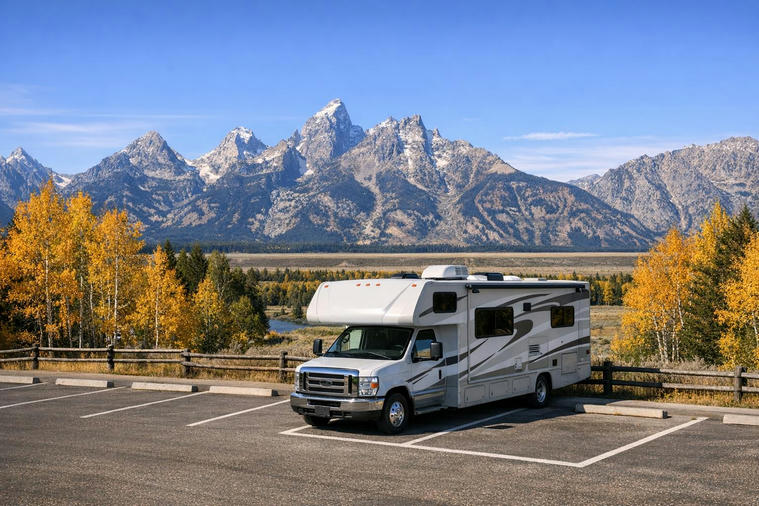
Instead of moving every night, you can use practical Montana and Wyoming gateway towns as launchpads into Yellowstone National Park and Grand Teton National Park. With the right routing, you avoid backtracking, reduce daily stress, and give yourself flexibility if weather or campground availability changes.
If you’re flying into Utah, starting with an RV rental in Salt Lake City gives you straightforward interstate driving north before transitioning into mountain highways. It’s one of the most beginner-friendly launch cities in the Mountain West.
This guide explains:
- Which gateway towns make the most practical RV bases
- How to connect them into a logical 7-day loop
- What to expect during fall travel
- Where to stay, using official park and tourism sources
For official park maps, alerts, campground details, and seasonal road status, always verify directly with:
- Yellowstone National Park (NPS): Yellowstone National Park
- Grand Teton National Park (NPS): Grand Teton National Park
- Travel Wyoming: Travel Wyoming
- Visit Montana: Visit Montana
Why Gateway Towns Matter for RV Travelers
Yellowstone and Grand Teton are large, high-elevation parks. According to the National Park Service, Yellowstone alone spans more than 2 million acres across Wyoming, Montana, and Idaho. Driving distances inside the parks are longer than they appear, and speeds are often slower due to wildlife and traffic.
Gateway towns — including Jackson (WY), West Yellowstone (MT), Gardiner (MT), and Cody (WY) — sit directly outside park entrances. For RV renters, they offer:
- Reliable fuel and grocery access
- More campground options
- Restaurants and laundromats
- Flexibility if in-park campgrounds are full or closed
In fall, this flexibility becomes especially important. Travel Wyoming notes that autumn brings cooler temperatures and fewer crowds, but conditions can change quickly at elevation.
Four Practical Yellowstone & Grand Teton RV Bases
1. Jackson, Wyoming (South of Grand Teton)
Jackson sits south of Grand Teton National Park along US-191/US-26/US-89.
Why it works:
- Direct highway access from Salt Lake City
- Full services before entering mountain terrain
- Quick access to the park’s Moose and Moran areas
Official park info: Grand Teton National Park
For first-time international renters, Jackson is an ideal adjustment stop after pickup in Utah.
2. West Yellowstone, Montana (West Entrance)
West Yellowstone sits at the West Entrance to Yellowstone National Park. From here, you enter near Madison Junction, a key connection point on Yellowstone’s Grand Loop Road.
Why it works:
- Simple approach roads
- Central access to geyser basins and the Old Faithful area
- Compact town layout
Official park info: Yellowstone National Park
3. Gardiner, Montana (North Entrance)
Gardiner sits at Yellowstone’s North Entrance near the Roosevelt Arch. According to the National Park Service, this entrance is the park’s only entrance open to automobiles year-round (weather conditions permitting).
Why it works:
- Lower elevation access compared to some other entrances
- Direct access to Mammoth Hot Springs
- Scenic drive along the Yellowstone River
Official park info and seasonal updates: Yellowstone National Park
4. Cody, Wyoming (East Entrance)
Cody sits east of Yellowstone and connects to the park via the East Entrance Road. Travel Wyoming highlights Cody as an Old West–heritage town with strong visitor services.
Why it works:
- Dramatic high-country approach scenery
- Good staging point if exiting or re-entering via the east
- Strong services for refueling before mountain travel
Official tourism info: Travel Wyoming
A 7-Day RV Loop from Salt Lake City
Drive times below are rounded planning estimates. Always confirm live road status on NPS sites before travel.
Day 1 – Salt Lake City to Jackson, WY
Pick up your RV and follow major highways north. This is a transition day.
Overnight: Jackson area or Gros Ventre Campground (Grand Teton National Park)
Official campground page: Grand Teton camping information
Day 2 – Grand Teton National Park
Drive the Teton Park Road and US-191 corridor through the park. Stop at official scenic overlooks and visitor centers listed by NPS.
Overnight: Jackson area or Colter Bay Campground
Official camping details: Grand Teton camping information
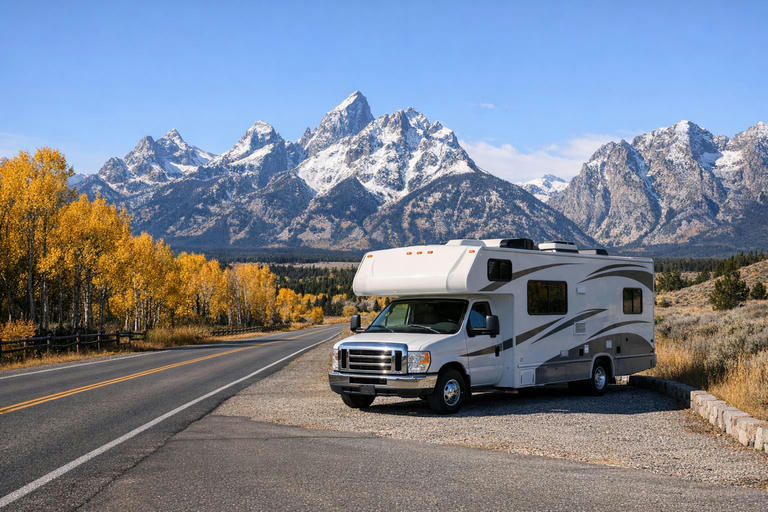
Day 3 – Jackson to West Yellowstone
Enter Yellowstone through the South Entrance (confirm seasonal status on the NPS road status page).
Overnight: West Yellowstone or Madison Campground
Official Yellowstone camping info: Yellowstone camping information
Day 4 – Central Yellowstone
Use the Grand Loop Road to access hydrothermal areas and scenic stops. Expect wildlife slowdowns.
Overnight: West Yellowstone or Fishing Bridge RV Park (hard-sided RVs only)
Official info: Yellowstone camping information
Day 5 – West Yellowstone to Gardiner
Travel north via Norris toward Mammoth Hot Springs.
Overnight: Gardiner area or check seasonal status for northern Yellowstone campgrounds via:
Day 6 – Gardiner to Cody
Cross the park eastward. Confirm East Entrance Road conditions in advance.
Overnight: Cody area campground (verify local tourism info via Travel Wyoming).
Day 7 – Cody to Salt Lake City
Return south toward Utah. Build in extra fuel and rest breaks before returning your vehicle.
For broader planning, see our guide to Understanding US National Parks for RV Travelers.
RV Campgrounds: What to Know Before Booking
Official park camping information:
- Yellowstone: Yellowstone camping information
- Grand Teton: Grand Teton camping information
Key points for first-timers:
- Many campgrounds close progressively in fall.
- Some require reservations in advance through official systems.
- Fishing Bridge RV Park is limited to hard-sided RVs.
- Size limits vary; confirm your motorhome length before reserving.
Always review the specific campground page for opening and closing dates before travel.
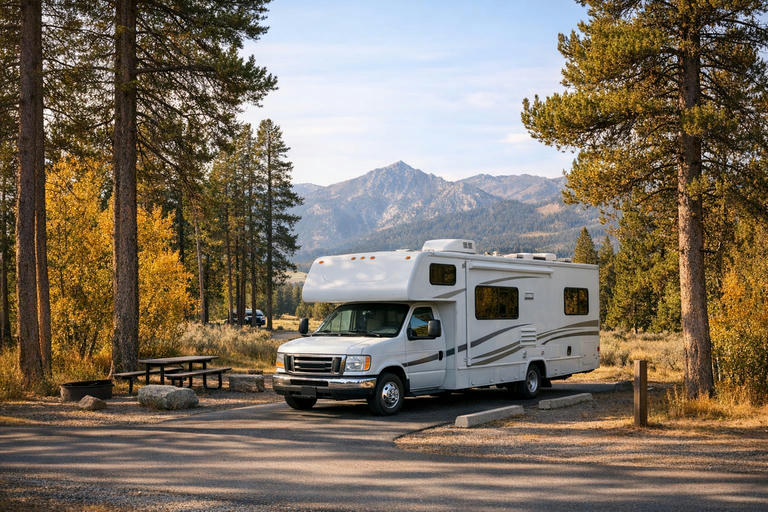
Fall Travel Conditions (September–October)
According to the National Park Service and Travel Wyoming:
Advantages:
- Reduced visitation compared with peak summer
- Active wildlife
- Cooler daytime temperatures
Planning considerations:
- Roads can close temporarily due to early snow
- Some visitor centers close for the season
- Overnight freezing temperatures are possible
Check:
- Yellowstone alerts: Yellowstone National Park
- Grand Teton alerts: Grand Teton National Park
- State travel updates: Travel Wyoming
FAQ: Yellowstone & Grand Teton RV Base Planning
Do I need campground reservations in fall?
Do I need campground reservations in fall?
Often yes. While crowds decrease after summer, many park campgrounds reduce capacity or close entirely. Always verify availability on official NPS campground pages before arrival.
Are RV hookups available inside the parks?
Are RV hookups available inside the parks?
Hookups are limited. Fishing Bridge RV Park in Yellowstone provides full hookups but requires hard-sided RVs. Most other park campgrounds do not provide hookups.
When do park roads close?
When do park roads close?
Road closures vary by weather and elevation. The North Entrance at Gardiner is typically open year-round to automobiles (conditions permitting), but other roads close seasonally. Confirm current road status on the Yellowstone NPS website.
Is Fishing Bridge open in fall for hard-sided RVs?
Is Fishing Bridge open in fall for hard-sided RVs?
Operations change seasonally. Check the official Yellowstone camping page for specific annual opening and closing dates.
Why Launch from Utah?
Beginning with an RV rental in Salt Lake City gives you:
- Major international airport access
- Interstate highways before mountain roads
- A logical south-to-north route through Grand Teton into Yellowstone
If you are comparing pickup points across the region, explore available Utah RV rentals.
This approach builds confidence gradually before mountain driving and high-elevation conditions.
Final Thoughts
Choosing the right Yellowstone Grand Teton RV base turns a complex park system into a clear, manageable loop.
By using Jackson, West Yellowstone, Gardiner, and Cody strategically — and by checking official NPS and state tourism updates before departure — you create flexibility for weather, road conditions, and seasonal campground changes.
With thoughtful planning, fall is one of the most rewarding seasons to explore the American West by RV.
Ready to compare USA RV rentals?
Use the compact search below to check live availability, compare motorhome options, and start shaping your route.