National Park Week Planner: Quick-Book Campgrounds Near America’s Most Popular Parks
National Park Week camping is one of the most rewarding ways to explore the United States in spring. In many regions, temperatures are milder than summer, desert parks come alive with seasonal color, and higher elevations begin reopening after winter.

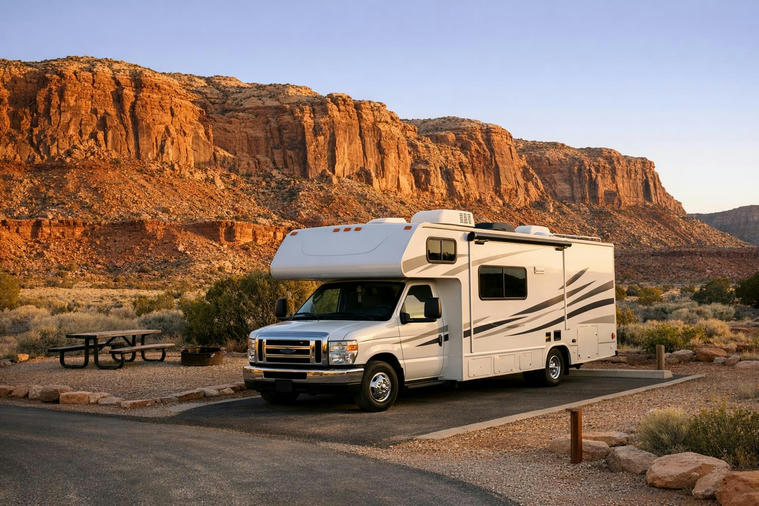
For international visitors renting an RV for the first time, the biggest challenge is not where to go — it is how to secure reservable, vehicle-appropriate campgrounds near America’s most popular parks without planning a year in advance.
This planner focuses on:
- Official, reservable campgrounds inside national parks or on federal land
- Booking only through government systems
- Spring road and weather realities
- A practical 7-day / 6-night Utah national park loop from Salt Lake City
Always confirm campground details, seasonal dates, alerts, and road conditions through the National Park Service and reserve campsites via Recreation.gov.
Why National Park Week Camping Works for First-Time RV Renters
The National Park Service manages more than 400 park units across the United States. Many of the most visited national parks — including Zion, Bryce Canyon, Grand Canyon, Yosemite, Arches, Canyonlands, and Yellowstone — operate developed campgrounds designed for vehicle access.
Most developed national park campgrounds include:
- Defined RV length limits by campsite
- Marked parking pads (paved or graded)
- Restrooms (flush or vault; some seasonal)
- Clear reservation windows and check-in times
For first-time RV renters, this structure is far easier than informal camping.
Spring Advantages
- Southern Utah and Arizona are more comfortable before peak summer heat.
- Yosemite waterfalls are often strongest during spring snowmelt.
- The South Rim of the Grand Canyon is open year-round, according to NPS.
- Many services begin reopening as roads clear at higher elevations.
The tradeoff: Spring Break periods and National Park Week increase campground demand. Booking strategy matters.
Where and How to Book Official National Park Campgrounds
Use only these two official systems:
- National Park Service for alerts, seasonal road openings, shuttle information, and campground overviews.
- Recreation.gov for reservations at most federally managed campgrounds.
When searching:
- Enter the exact campground name.
- Filter by RV length and equipment type.
- Review the site description carefully (back-in vs. pull-through, maximum vehicle length, and generator rules).
- Confirm whether hookups are provided — many in-park sites are dry camping only.
Avoid third-party campground listing sites. Recreation.gov lists official fees, cancellation rules, and real-time availability. Our U.S. campground booking guide provides a step-by-step overview for first-time visitors.
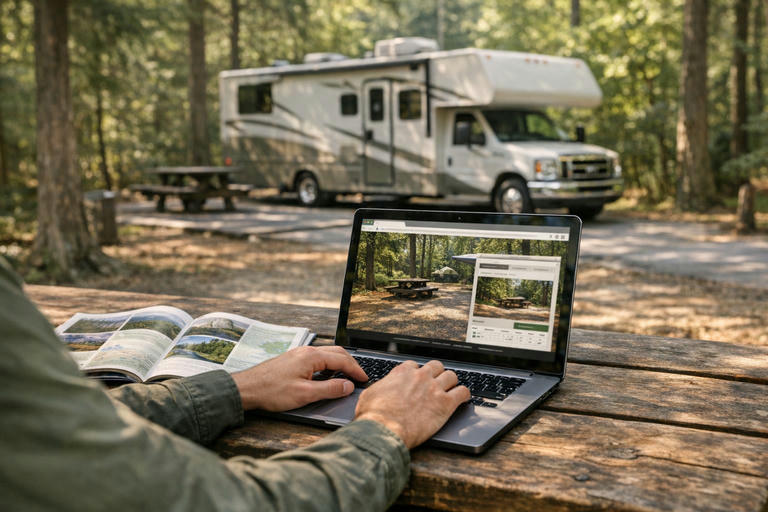
Quick-Book Campgrounds at Iconic Parks
Below are reservable, official campground examples at several high-demand parks. Always confirm length limits and seasonal dates before booking.
Zion National Park (Utah)
Watchman Campground
Booking: Recreation.gov listing for Watchman Campground
Located near the South Entrance, Watchman is one of Zion’s primary reservable campgrounds. According to NPS, Zion Canyon operates a seasonal shuttle system; staying inside the park reduces the need to drive once parked.
Why it works:
- Clear site-by-site RV length listings
- Paved campground loops
- Access to park transit during shuttle season
Bryce Canyon National Park (Utah)
North Campground
Booking: Recreation.gov listing for North Campground
Sunset Campground (seasonal; check its NPS status before booking) is another in-park option when open.
Bryce sits at high elevation. Night temperatures in spring can still be cold. Confirm campground opening dates on nps.gov before building your route.
Why it works:
- Inside the park boundary
- Designed for RV access
- Close to Bryce Amphitheater viewpoints
Capitol Reef National Park (Utah)
Fruita Campground
Booking: Recreation.gov listing for Fruita Campground
Fruita Campground is Capitol Reef’s developed campground near the Fruita Historic District.
Spring considerations:
- Some sites are reservable; verify booking windows on Recreation.gov.
- Services and water availability can be seasonal. Confirm current status on nps.gov.
Why it works:
- Central location along UT-24
- Easy access for standard self-propelled RVs
Arches National Park (Utah)
Devils Garden Campground
Booking: Recreation.gov listing for Devils Garden Campground
Devils Garden is the only campground inside Arches National Park.
Why it works:
- Inside the park boundary
- Clearly posted vehicle length limits
- Positioning for early access to trails
Check current park entry requirements and seasonal notices on nps.gov before arrival.
Grand Canyon National Park – South Rim (Arizona)
Mather Campground
Booking: Recreation.gov listing for Mather Campground
The South Rim is open year-round according to the National Park Service.
Why it works:
- Located in Grand Canyon Village
- Access to shuttle routes
- Paved highway approach roads
Yosemite National Park (California)
Upper Pines Campground
Booking: Recreation.gov listing for Upper Pines Campground
Located in Yosemite Valley, Upper Pines is one of the park’s primary reservable campgrounds.
Spring notes:
- Road access may vary depending on snow conditions.
- Some higher-elevation roads open gradually.
Always confirm current access and campground status through nps.gov.
Yellowstone National Park (Wyoming, Montana, Idaho)
Madison Campground
Booking: Recreation.gov listing for Madison Campground
Yellowstone road openings occur in stages after winter. Campground opening dates vary by location. Confirm all spring access details on the official National Park Service site before planning arrival.
Why Salt Lake City Is a Strategic Spring Gateway
Salt Lake City provides direct interstate connections to southern Utah’s national parks and major services for first-time renters.
From here, you can reach:
- Zion National Park
- Bryce Canyon National Park
- Capitol Reef National Park
- Arches National Park
- Canyonlands National Park
Daily drive times between most southern Utah parks average roughly 2–4 hours under normal spring conditions. Always allow buffer time for fuel stops, weather, and park entrance lines.
If this is your starting point, consider planning your trip around an RV rental in Salt Lake City. Broader Utah RV rentals may suit longer multi-state itineraries.
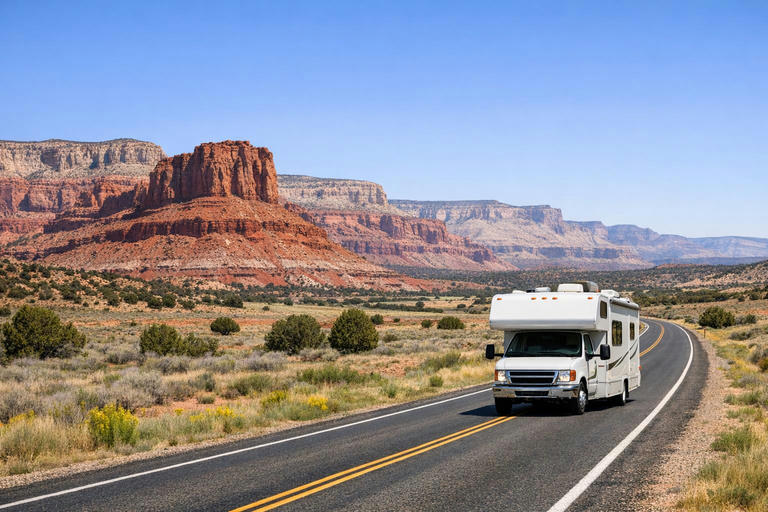
A Practical 7-Day / 6-Night Utah National Park Spring Loop
Drive times below are rounded planning estimates and can vary with weather or traffic.
Day 1 – Arrive in Salt Lake City
- Collect your RV.
- Shop for groceries.
- Review campground reservation confirmations.
- Take a short familiarization drive.
Understanding dump procedures and site alignment early helps first-time renters build confidence. For system basics, see the RV travel planning hub.
Day 2 – Salt Lake City to Zion National Park
Plan fuel in larger towns before entering Springdale. Once parked, rely on the Zion Canyon Shuttle when operating.
Day 3 – Zion National Park
Keep the RV parked. Focus on shuttle-accessible areas and short-to-moderate hikes.
Day 4 – Zion to Bryce Canyon
Bryce Canyon sits at high elevation. Expect cooler nights than Zion.
Day 5 – Bryce Canyon to Capitol Reef
UT-12 is a designated scenic byway. Allow additional time for viewpoints and slower speeds.
Day 6 – Capitol Reef to Arches
Check Arches entry requirements and seasonal notices before arrival.
Day 7 – Return to Salt Lake City
Refuel near a major highway exit before returning the RV. Allow time for cleaning and tank emptying if required by your rental agreement.
Why this loop works for first-time RV renters:
- Major highways for most long segments
- Predictable fuel access in established towns
- Official, reservable in-park campgrounds
- Moderate daily drive times
Spring Booking and Road Tips
- Check campground opening dates and road alerts on nps.gov before departure.
- Match your RV’s exact length to the campsite’s maximum length.
- Avoid relying on first-come, first-served sites during Spring Break periods.
- Build buffer time for weather changes, especially at Bryce Canyon and other high elevations.
- Review cancellation policies carefully on Recreation.gov.
First-Timer FAQ: National Park Week Camping
How far in advance do sites open for booking?
How far in advance do sites open for booking?
Many Recreation.gov campgrounds open on rolling windows that vary by park. The campground’s booking page clearly lists release timing.
Are national park campgrounds full-hookup?
Are national park campgrounds full-hookup?
Most in-park sites do not provide sewer, water, and electric at every campsite. Confirm utilities directly on the campground’s Recreation.gov listing.
What RV size works best?
What RV size works best?
Shorter self-propelled RVs are generally easier to place in older campgrounds. Always compare your confirmed rental length to the maximum length stated for the specific site.
What if spring weather changes my plan?
What if spring weather changes my plan?
Monitor park alerts on the National Park Service site. If needed, modify or cancel through Recreation.gov according to your reservation’s policy.
Final Planning Checklist
Before confirming National Park Week camping plans:
- Verify seasonal campground dates on nps.gov.
- Reserve only through Recreation.gov.
- Confirm your RV’s length before choosing a campsite.
- Plan conservative drive times between parks.
- Keep flexibility in case of late snow or weather advisories.
National Park Week camping rewards preparation and realistic pacing. By focusing on official reservation systems, developed in-park campgrounds, and manageable routes, first-time international RV renters can explore America’s most iconic landscapes with confidence.
Ready to compare USA RV rentals?
Use the compact search below to check live availability, compare motorhome options, and start shaping your route.