Pacific Northwest RV Circuit: Waterfalls, Byways, and Waterfront Camps
A Pacific Northwest RV trip is one of the most rewarding summer road journeys in the United States. In one well-shaped loop, you can combine waterfall-lined river gorges, a snow-capped volcano, temperate rainforest, and long stretches of Pacific coastline — all at a pace that suits first-time international RV renters.

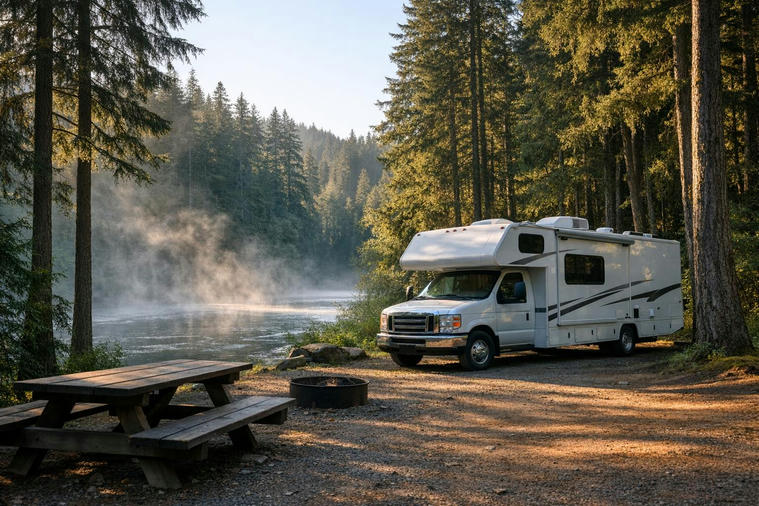
This 7-day circuit starts and ends in Portland, Oregon, crosses into Washington for Mount Rainier and Olympic National Park, and returns south along the Oregon Coast. Distances are realistic, major roads are paved and well signed, and campground infrastructure is strong across federal and state park systems.
If you’re planning an RV rental in Portland, this route keeps logistics manageable while delivering classic Pacific Northwest scenery.
Why This Pacific Northwest RV Trip Works for First-Time Renters
For international visitors new to driving in the USA, this region offers:
- Well-maintained interstate and state highways.
- Clearly posted vehicle length limits in national and state parks.
- Established campground systems in national parks, national forests, and state parks.
- Centralized reservation systems such as Recreation.gov for many federally managed campgrounds.
For statewide planning and seasonal travel guidance, use official resources from Travel Oregon and Experience Washington. For many federal sites, including Mount Rainier National Park campgrounds, reservations are handled through Recreation.gov.
Trip Shape: 7-Day Loop from Portland
Route overview:
Portland → Columbia River Gorge → Mount Rainier National Park → Olympic National Park (Peninsula loop) → Washington Coast → Oregon Coast (U.S. Highway 101) → Portland
Typical daily driving: 1–4 hours. Total distance: Comfortable for a week without long-haul days.
Always check current conditions and alerts on official park websites before departure, especially for Mount Rainier National Park and Olympic National Park.
7-Day Pacific Northwest RV Itinerary
Day 1 – Portland to the Columbia River Gorge
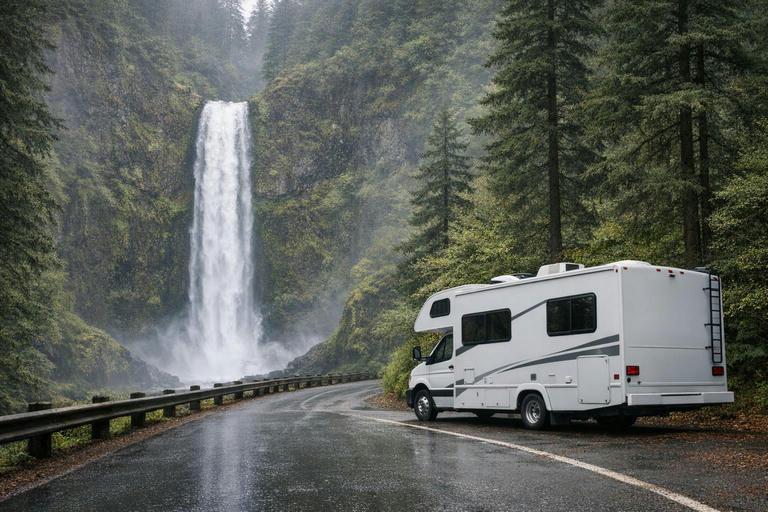
Collect your motorhome and head east on Interstate 84 into the Columbia River Gorge National Scenic Area. This corridor follows the Columbia River between Oregon and Washington and is known for its waterfall concentration and dramatic basalt cliffs.
The Historic Columbia River Highway and viewpoints near waterfall corridors are popular; arrive early and use designated parking suitable for larger vehicles.
Overnight recommendations (federal):
- Ainsworth State Park (Oregon State Parks) – forested setting with RV-friendly sites near the Gorge corridor. Official info via Travel Oregon and Oregon State Parks.
- Columbia River Gorge National Scenic Area campgrounds (U.S. Forest Service) – book via Recreation.gov.
Practical tip: Use this first night to practice leveling, water connections, and understanding your dump valves.
Day 2 – Columbia River Gorge to Mount Rainier National Park
Continue north into Washington and travel toward Mount Rainier National Park (nps.gov/mora). Mount Rainier is an active stratovolcano and the highest peak in Washington State.
Roads into the park are paved but winding, with elevation changes. Drive steadily and allow extra time.
Overnight recommendations (inside the park, reservable through Recreation.gov):
- Cougar Rock Campground (commonly open in summer; check status and vehicle length limits).
- Ohanapecosh Campground (forested setting in a lower-elevation area of the park).
Both are managed by the National Park Service, and regulations, seasonal dates, and length limits are published on the official Mount Rainier pages and Recreation.gov listings.
Fuel before entering the park; services are limited inside.
Day 3 – Mount Rainier to Olympic National Park (Peninsula)
Travel west toward Olympic National Park (nps.gov/olym), which protects distinct ecosystems: Pacific coastline, temperate rainforest, and alpine high country.
Expect cooler, damper conditions in rainforest areas even during summer.
Overnight recommendations by district (all official NPS campgrounds):
- Hoh Campground (rainforest setting; reserve via Recreation.gov when available).
- Kalaloch Campground (coastal bluff overlooking the Pacific; check official length limits).
Olympic’s campgrounds vary in road approach and RV length allowances. Always confirm your motorhome size against posted limits.
Day 4 – Exploring Olympic National Park
Dedicate a full day to one district instead of trying to cross the entire park. Olympic is large, and driving times around the peninsula can be longer than they appear on a map.
Options:
- Rainforest experience in the Hoh or Quinault valleys.
- Pacific coastline at Kalaloch or other designated beach access points.
- Mountain scenery near Hurricane Ridge (verify current vehicle guidance and road status on the official park site).
Staying a second night in the same campground reduces setup and breakdown time.
Day 5 – Olympic Peninsula to Washington Coast
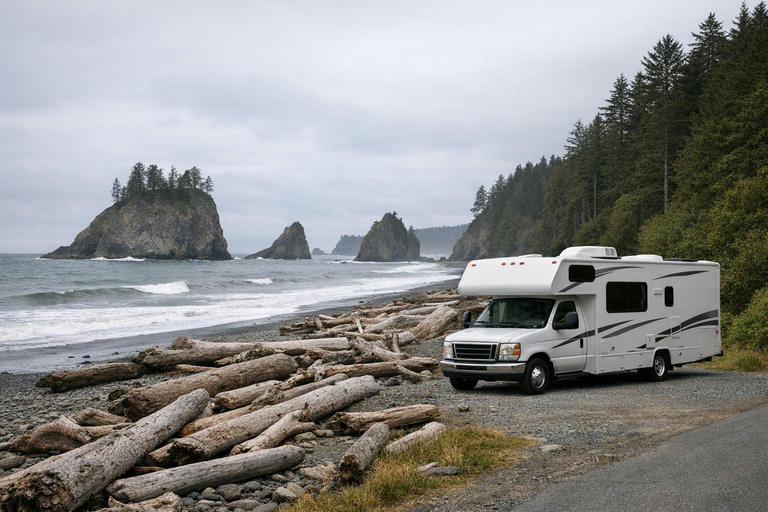
Continue south along the outer Washington Coast. Experience Washington (Experience Washington) provides regional overviews of coastal towns and recreation areas.
Overnight recommendations (Washington State Parks; book through official Washington State Parks system):
- Cape Disappointment State Park – coastal setting near the mouth of the Columbia River with RV sites.
- Grayland Beach State Park – oceanfront access and established RV campground loops.
Check each park’s official page for site sizes, hookup availability, and reservation policies.
Day 6 – Washington Coast to the Oregon Coast (U.S. Highway 101)
Cross the Columbia River into Oregon and join portions of U.S. Highway 101. Travel Oregon provides a detailed Oregon Coast overview and highlights state park access along the shoreline.
The route includes sea stacks, cliffside viewpoints, and protected beach access points.
Overnight recommendations (Oregon State Parks; reserve via official state park system):
- Fort Stevens State Park – large campground near the Columbia River entrance with established RV infrastructure.
- Beverly Beach State Park – forested campground between highway and beach access points.
Highway note: U.S. 101 is fully paved and RV-accessible. Use designated pullouts for photography and allow faster traffic to pass on curves.
Day 7 – Oregon Coast to Portland
Return inland toward Portland. Plan sufficient time for:
- Refueling.
- Using an approved dump station if required by your rental agreement.
- Cleaning and packing.
Portland is a practical gateway with major airport access and easy connections to Interstate highways.
Explore available Oregon RV rentals and consider starting with an RV rental in Portland for maximum route flexibility.
Campground Reservations and Booking Systems
For this Pacific Northwest RV trip:
- Mount Rainier National Park and many Olympic National Park campgrounds are listed on Recreation.gov.
- Oregon State Parks and Washington State Parks have their own official reservation systems (linked through Travel Oregon and Experience Washington).
Summer (June–September) is peak season. Reserve as early as your schedule allows, especially for national park campgrounds.
Always confirm:
- Maximum RV length.
- Hookups versus dry camping.
- Check-in and checkout times.
Driving Tips for International RV Renters
- Distances and speeds are posted in miles and miles per hour.
- Use lower gears on extended downhill grades in mountain areas.
- Refill fuel at half a tank in rural regions.
- Expect narrower campground roads in older national park campgrounds.
Small to mid-size Class C motorhomes or campervans are the easiest to manage on this loop, especially in forested campgrounds with tighter turning radii.
For deeper regional context, review the guide: RV Travel in the Pacific Northwest.
Frequently Asked Questions (International RV Renters)
Are there RV length limits in national parks?
Are there RV length limits in national parks?
Yes. Each national park campground publishes maximum vehicle lengths on its official page and Recreation.gov listing. Always compare your motorhome length to the posted limit before reserving.
Do I need reservations for summer travel?
Do I need reservations for summer travel?
For Mount Rainier National Park, Olympic National Park, and popular Oregon and Washington state parks, summer reservations are strongly recommended. Many sites release availability on Recreation.gov or state systems months in advance.
Are dump stations available?
Are dump stations available?
Many national park and state park campgrounds provide designated dump stations. Availability is listed on official campground pages. Confirm before arrival if you are not staying at a full-hookup site.
Can I drive this loop in a standard motorhome without a second vehicle?
Can I drive this loop in a standard motorhome without a second vehicle?
Yes. All highways mentioned are paved and regularly used by RV travelers. Choose appropriately sized campsites and verify road advisories on official park sites before entering mountainous or remote districts.
Final Thoughts
This Pacific Northwest RV trip blends river gorges, volcanic landscapes, rainforest ecosystems, and protected coastline into one efficient summer loop.
By using official planning resources — Travel Oregon, Experience Washington, national park websites, and Recreation.gov — you can build a reservation strategy that supports a smooth, confident first RV journey in the United States.
Ready to compare USA RV rentals?
Use the compact search below to check live availability, compare motorhome options, and start shaping your route.