Philadelphia for History Lovers: Walkable RV Basecamps and Timed Tickets
Philadelphia is one of the most concentrated history cities in the United States. Within a compact area, you can walk between the buildings, streets, and landmarks connected to the founding of the country.

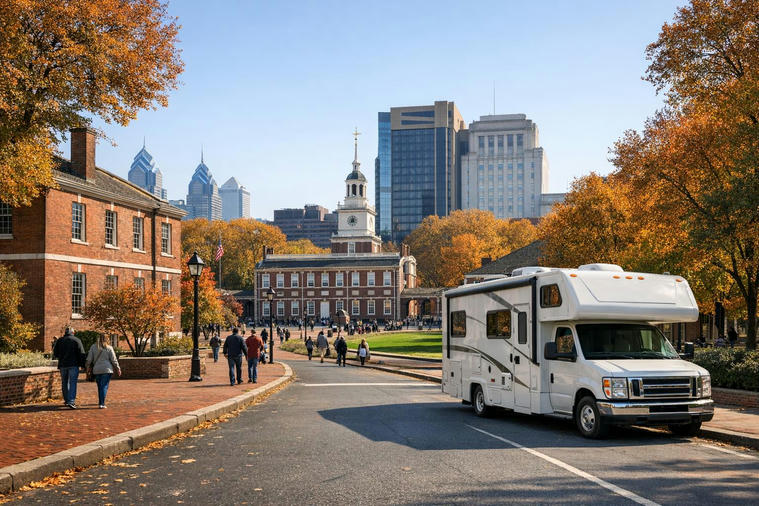
For international travelers on an RV road trip, that is both a gift and a challenge.
The gift: once you are in the historic core, you can explore almost everything on foot.
The challenge: you do not want to drive — or try to park — a large motorhome in the historic grid of Old City and Center City.
This guide focuses on what first-time international renters care about most:
- How to avoid Philadelphia RV parking tickets and tight-street stress
- How to use walkable basecamps and official timed tickets to explore confidently
If you are planning a fall long weekend as part of a wider Mid-Atlantic journey, this strategy lets you experience the history without worrying about your vehicle.
Why Philadelphia Works Well as an RV City Break
From an RV planning perspective, Philadelphia works best as:
- A 2–3 night stop within a broader Pennsylvania or East Coast loop
- A culture-focused break between scenic or rural driving days
- A “park once, explore on foot” destination
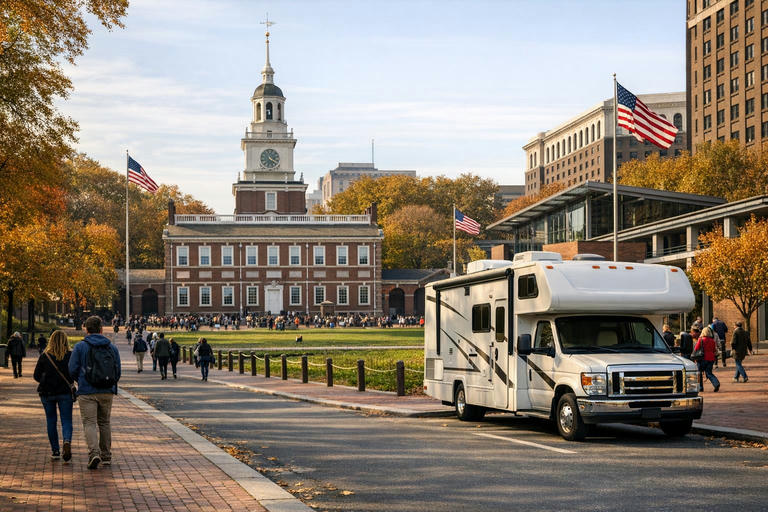
The heart of the historic district is Independence National Historical Park, managed by the National Park Service. The park includes Independence Hall, the Liberty Bell Center, Congress Hall, Franklin Court and other sites tied to the American Revolution and the early federal government.
These landmarks are clustered in a compact section of Center City and Old City. That tight layout makes Philadelphia unusually practical for visitors who prefer to walk rather than navigate dense urban traffic.
If your trip starts or ends here, review your options for an RV rental in Philadelphia before arrival so your vehicle size matches your comfort level and route.
First Rule: Minimize Downtown RV Driving
Let’s address the biggest operational risk up front: Philadelphia RV parking tickets.
Downtown Philadelphia — especially Old City and the blocks surrounding Independence Mall — was not designed for oversized vehicles. Key realities for first-time US renters:
- Streets are narrow and often one-way.
- On-street parking is tightly regulated and limited in length.
- Many garages have posted clearance limits that do not accommodate motorhomes.
- Signage can vary by block and time of day.
For visitors new to US road rules, this is not the place to improvise.
To reduce your risk:
- Do not plan to park a motorhome on the street in Old City.
- Assume most multi-level garages will not accept your vehicle height.
- Read every posted parking sign carefully if you stop, even briefly.
- Use a basecamp strategy instead of attempting central-city parking.
In practice, the simplest approach is to stay outside the historic core and commute in by train, bus, or rideshare.
For official neighborhood context, events, and planning information, consult Visit Philadelphia and the Philadelphia Visitor Center before you travel.
Choosing a Walkable RV Basecamp
Philadelphia sits in southeast Pennsylvania near the Delaware River, with highway connections from major interstate corridors and bridges into New Jersey. The metro area offers logical base zones that let you avoid tight colonial-era street grids.
When choosing a campground, prioritize:
- Direct highway access instead of small residential streets
- Clear confirmation that motorhomes of your length are accepted
- Straightforward routes to commuter rail, park-and-ride, or rideshare pickup
- Clearly published arrival instructions for larger vehicles
Avoid booking inside the dense grid of Old City, Society Hill, or central Center City. Instead, look to suburban Pennsylvania or across the river in New Jersey.
Recommended RV Basecamps (Official Sites)
Below are named options with direct official websites for confirmation and booking.
Campus Park & Ride (Tinicum Township, PA)
Official site: Campus Park & Ride
Why it works: Located south of Center City near major highways and Philadelphia International Airport, this park offers easier highway approaches than downtown streets. Its position makes transit or rideshare connections into Center City practical without threading a large RV through historic neighborhoods.
Philadelphia / West Chester KOA Holiday (West Chester, PA)
Official site: Philadelphia / West Chester KOA Holiday
Why it works: West of the city with convenient highway access, this established RV campground provides structured sites and full-service infrastructure. It suits travelers who prefer a quieter suburban base while dedicating full days to Center City sightseeing.
Timberland Lake Campground (Clarksboro, NJ)
Official site: Timberland Lake Campground
Why it works: Located across the Delaware River in New Jersey, it offers an alternative approach to Philadelphia via regional highways and river crossings. For some international renters, approaching from New Jersey feels more straightforward than entering older Pennsylvania neighborhoods directly.
Always confirm maximum vehicle length, seasonal dates, and check-in procedures directly with the campground before arrival.
Independence National Historical Park: Tickets and Strategy
Independence National Historical Park is the anchor for any history-focused visit. According to the National Park Service, the park includes:
- Independence Hall
- Liberty Bell Center
- Congress Hall
- Franklin Court
- Old City Hall
Timed Entry and Official Guidance
Ticketing and timed entry procedures — particularly for Independence Hall — are managed by the National Park Service and can vary by season and demand. Always verify current requirements on the official park website before your visit.
For a fall long weekend:
- Check entry procedures at least a few days before arriving in Philadelphia.
- Build your sightseeing day around any confirmed timed entry.
- Arrive early in the district to allow for security screening and orientation.
Start at the Independence Visitor Center
The Philadelphia Visitor Center operates near the historic district and provides maps, walking guidance, and official information. Begin here to confirm layout, clarify ticket timing, and plan efficient walking routes.
A smooth historic-core day often looks like this:
- Arrive in Center City early from your campground.
- Orient at the Visitor Center.
- Walk the outdoor sections of Independence Mall.
- Attend your timed entry at Independence Hall.
- Cluster nearby sites to minimize backtracking.
A Practical 3-Night Structure for a Fall Long Weekend
Three nights at one basecamp gives you two full city days without moving your RV.
Day 1 – Arrival and Setup
- Drive to your selected campground in early or mid-afternoon.
- Set up completely (power, water, leveling) so you do not need to adjust in the morning.
- Confirm your transit or rideshare plan into Center City.
Avoid combining a long highway drive with an ambitious museum schedule.
Day 2 – The Founding Era
Dedicate this day to Independence National Historical Park.
Walkable priorities:
- Independence Hall, following the official ticket instructions
- Liberty Bell Center
- Congress Hall and surrounding historic structures
In fall, cooler temperatures make extended walking between sites more comfortable than in peak summer heat.
Day 3 – Broaden the Story
Use your second full day to expand beyond the Revolution.
Ideas highlighted by Visit Philadelphia include:
- Museums along the Benjamin Franklin Parkway
- Exploring historic streets in Old City beyond the main park units
- Time along the Delaware River waterfront
Limit yourself to one or two major stops. For first-time visitors, depth is more rewarding than rushing.
Transit Logic for International Renters
Public transport suitability depends on your campground location. Use official tourism resources such as Visit Philadelphia and the Philadelphia Visitor Center to identify major transit hubs serving Center City.
General approach:
- Identify your nearest practical rail, bus, or rideshare corridor before moving the RV.
- If you plan to drive closer to the city edge, confirm that parking is suitable for your vehicle size.
- Leave the motorhome parked and explore on foot once inside the historic district.
Avoid relocating your RV daily. Move it once to a basecamp, then rely on smaller-scale transport.
If Philadelphia is one stop in a broader journey, compare wider Pennsylvania RV rentals to connect this city break with rural and scenic driving sections. If you are new to renting, review practical steps and what to expect through the RV rental process before departure.
Why Fall Is an Excellent Season
Fall is one of the most comfortable seasons for a history-focused trip.
Advantages include:
- Cooler daytime temperatures for walking between sites
- Pleasant conditions for standing in ticket or security lines
- Attractive foliage in parks and tree-lined streets
Mornings can be cool, especially for early timed entries, so layer your clothing. As this is a popular travel season, check official guidance on tickets before arrival.
Quick Practical FAQs for First-Time RV Visitors
Can I park my RV near Independence Hall?
Can I park my RV near Independence Hall?
It is strongly discouraged. Street parking is tightly regulated and most garages have clearance limits that are not suitable for motorhomes. Use a suburban or cross-river campground and commute in.
Do I need timed tickets for Independence Hall?
Do I need timed tickets for Independence Hall?
Procedures are set by the National Park Service and can vary. Check the official park website shortly before your visit to confirm current requirements and distribution methods.
Is Philadelphia manageable as my first US city stop in an RV?
Is Philadelphia manageable as my first US city stop in an RV?
Yes — if you adopt a basecamp strategy. Park outside the historic core, plan your transit in advance, and limit downtown driving.
Are there vehicle size or roadway considerations I should be aware of?
Are there vehicle size or roadway considerations I should be aware of?
Yes. Historic districts have narrow lanes and frequent one-way streets. Always verify height and length limits before entering any garage or restricted road. If your unit is longer or taller than a typical van conversion, avoid central-city navigation and follow campground directions carefully from major highways.
Make Philadelphia an Easy Win on Your RV Trip
Philadelphia rewards slow, walkable exploration. The key is not mastering downtown driving — it is choosing the right base and planning around official ticket systems.
With a well-located campground, a clear transit plan, and up-to-date guidance from official sources, you can focus on what you came for: standing in the places where history was made — without worrying about Philadelphia RV parking tickets or last-minute surprises.
Ready to compare USA RV rentals?
Use the compact search below to check live availability, compare motorhome options, and start shaping your route.