Philadelphia in a Weekend: RV-Friendly Stops for History, Art, and Food Halls
A Philadelphia RV weekend is one of the easiest ways for international visitors to experience early American history, major museums, and classic U.S. food culture—without constantly driving a large vehicle through dense streets.

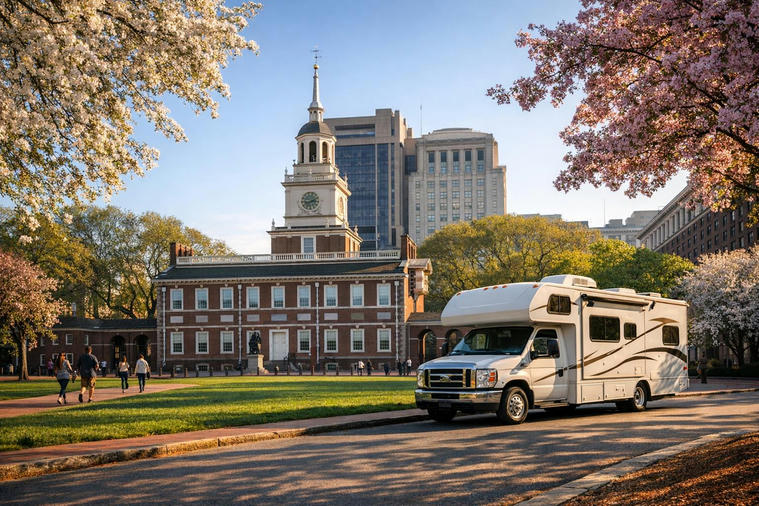
Philadelphia’s core districts are compact and walkable, and the city is supported by strong official visitor resources. For first-time RV renters, that makes it an ideal long-weekend stop within a broader Mid-Atlantic road trip.
This guide focuses on logistics first: where to base your RV, how to explore without urban driving stress, and which districts deliver the most value in two or three nights.
Why Philadelphia Works for a First-Time RV City Break
For international drivers, U.S. cities can feel intense: multi-lane highways, one-way systems, and limited parking for larger vehicles.
Philadelphia solves much of that by offering:
- A clearly defined historic core in Old City and Independence National Historical Park
- A major museum corridor along the Benjamin Franklin Parkway, leading toward Logan Circle
- A dense, walkable downtown officially referred to as Center City
- Centralized orientation at the Independence Visitor Center, operated in partnership with city tourism resources
You can review up-to-date neighborhood guidance and seasonal highlights at the official city tourism site, Visit Philadelphia: Visit Philadelphia
If you are arranging vehicles now, compare options for an RV rental in Philadelphia early—spring long weekends are popular travel times.
Where to Base Your RV
Historic Philadelphia’s streets were not designed for modern motorhomes. Plan to:
- Stay outside Old City and the densest part of Center City
- Travel into the core by taxi, rideshare, or regional rail/subway
- Return to your RV in the evening to a calmer setting
Before arrival, check official maps and transportation guidance from the Philadelphia Visitor Center: Philadelphia Visitor Center
The Visitor Center, located in the Independence area, is an excellent first stop once you’re in the city on foot. Staff can provide orientation, printed maps, and advice on major attractions.
If Philadelphia is part of a longer trip, explore broader Pennsylvania RV rentals and map your route so you approach and exit the metro area outside peak commuter hours.
Stop 1: Independence National Historical Park (Old City)
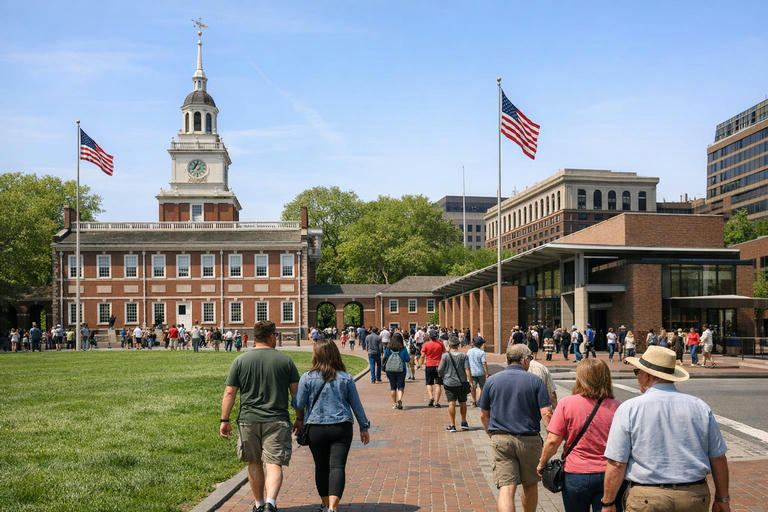
The heart of any Philadelphia RV weekend is Independence National Historical Park, managed by the National Park Service (NPS): Independence National Historical Park
Often called “America’s most historic square mile,” the park preserves sites central to the founding of the United States.
Within walking distance you’ll find:
- Independence Hall, where the Declaration of Independence and U.S. Constitution were debated and adopted
- The Liberty Bell Center
- Historic structures and landscaped public spaces throughout the Old City district
Start at or near the Independence Visitor Center, which provides orientation and information on access and timing.
Practical Planning Notes
Old City’s preserved streets and brick rowhouses are directly adjacent to the park area, making it easy to combine major landmarks with smaller museums, cafés, and riverfront walks—without needing to relocate.
Stop 2: The Benjamin Franklin Parkway and Logan Circle
From historic Old City, shift your focus west toward the Benjamin Franklin Parkway, a grand boulevard linking City Hall to a cluster of leading cultural institutions.
This area includes:
- Major art museums and cultural institutions
- The circular green space at Logan Circle
- Wide sidewalks and open public space compared to tighter Old City streets
The Parkway district feels spacious and formal—almost European in layout—and is comfortable for visitors adjusting to U.S. city navigation.
Plan one concentrated museum afternoon rather than multiple cross-city journeys. In spring, trees and landscaped areas along the Parkway make this a pleasant walking route between institutions.
For current exhibitions and events, consult Visit Philadelphia before confirming plans.
Stop 3: Reading Terminal Market and Center City Food Culture
No Philadelphia RV weekend is complete without experiencing its food halls.
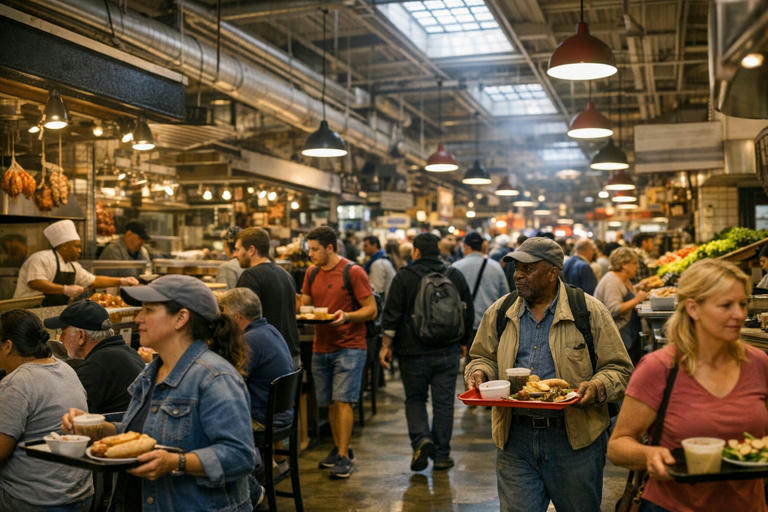
According to Visit Philadelphia, Reading Terminal Market is one of the city’s most historic and popular indoor public markets, located in Center City.
Inside you’ll find:
- Long-standing vendors serving regional and international dishes
- Bakeries and sweet counters
- Casual seating suited to flexible, no-reservation meals
Combine your market stop with a walk around Center City’s main streets and public squares. Because this district is dense and busy, leave your RV at your base and enter by transit.
Spring Travel in Philadelphia
A spring long weekend is one of the most balanced times to visit.
You can expect:
- Moderate daytime temperatures compared to summer
- Active parks and public spaces
- A flexible mix of indoor museums and outdoor walking
Spring weather can change quickly. Pack layers and be prepared to shift museum time and outdoor time depending on the forecast.
Check official seasonal listings at Visit Philadelphia before departure.
Practical RV Logistics for International Visitors
1. Time Your Arrival
Avoid weekday rush hours when entering or bypassing the Philadelphia metro area. Midday arrivals or weekend transitions are generally less pressured.
2. Know Your Exact Vehicle Height
Urban clearances vary. Always confirm your RV’s height before entering structured parking or older neighborhoods.
3. Refuel Outside the Urban Core
It is typically easier to access larger fuel stations in suburban areas than in dense parts of Center City.
4. Use Public Transport from the Core’s Edge
Philadelphia’s transit network connects outer neighborhoods with Center City and Old City. The Visitor Center can help you identify the simplest routes for your base location.
5. Keep the Weekend Focused
Limit yourself to:
- Independence National Historical Park and Old City
- One Parkway museum afternoon
- One major food-hall experience
This structure keeps travel simple and realistic for a two- or three-night stay.
Frequently Asked Questions: Philadelphia RV Weekend
Can I park my RV near Independence Hall?
Can I park my RV near Independence Hall?
Parking suitable for motorhomes is extremely limited in Old City and around Independence National Historical Park. The recommended strategy is to park outside the dense core and enter the area by public transport or rideshare.
Do I need tickets for Independence Hall?
Do I need tickets for Independence Hall?
Entry procedures can vary. Always check the official National Park Service page for Independence National Historical Park before your visit to confirm whether timed tickets are required.
What is the best area to explore on foot?
What is the best area to explore on foot?
Old City (including Independence National Historical Park) and Center City are the most walkable districts for a short visit. The Benjamin Franklin Parkway connects cultural institutions in a single corridor.
Is public transport realistic for visitors?
Is public transport realistic for visitors?
Yes. Philadelphia’s transit system links neighborhoods and Center City. The Philadelphia Visitor Center provides maps and advice on using transit efficiently as a visitor.
Is a Weekend Enough?
For a focused introduction, yes.
In two or three nights, you can experience:
- Founding-era history in Independence National Historical Park
- Major museum collections along the Parkway
- Established food culture at Reading Terminal Market
Philadelphia works especially well as a midpoint between Washington, D.C. and New York City, or as part of a larger Mid-Atlantic loop.
To begin shaping your trip, explore an RV rental in Philadelphia or compare Pennsylvania RV rentals to design a wider state route.
With a clear base outside the urban core and a tightly organized plan focused on named districts, your Philadelphia RV weekend can feel confident, manageable, and highly rewarding—even on your first U.S. RV adventure.