Smoky Mountains by RV: Traffic-Light Avoidance and Quiet-Hour Hikes
Planning a spring or early-summer road trip to Great Smoky Mountains National Park? These Smoky Mountains RV tips are designed for first-time international visitors collecting a motorhome in Tennessee and heading east into one of America’s best-known national parks.

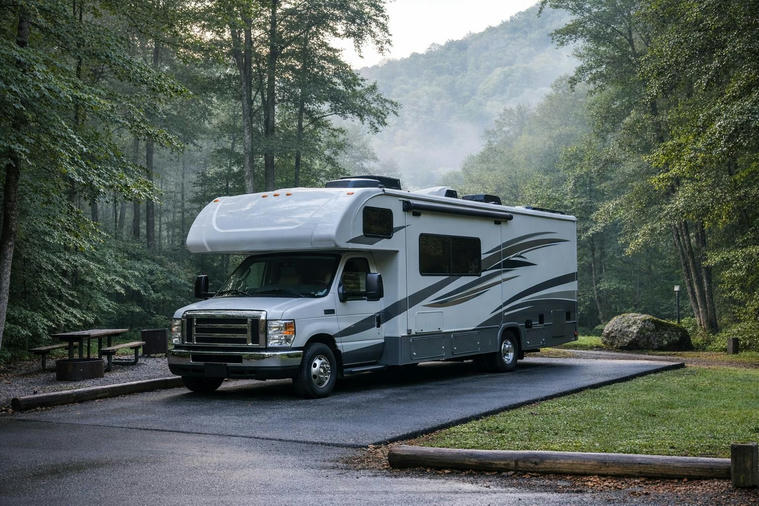
According to the National Park Service, Great Smoky Mountains National Park consistently ranks as the most visited national park in the United States (see the official park site at Great Smoky Mountains National Park). That popularity brings traffic, busy trailheads, and limited parking—especially late morning through mid-afternoon.
With smart timing, careful gateway choices, and a relaxed 7-day plan, you can avoid most congestion and still experience peaceful forest roads, historic cabins, and cool mountain hikes.
If you’re starting in Music City, arrange your vehicle first with an RV rental in Nashville, then map your Smokies leg around campground availability and early-morning access.
Why the Smokies Work Well for First-Time RV Renters
Great Smoky Mountains National Park spans Tennessee and North Carolina and is managed by the National Park Service. The park is known for forested ridgelines, biodiversity, historic structures, and scenic mountain drives (official information: Great Smoky Mountains National Park).
For international visitors new to US road travel, it offers several advantages:
- Fully paved main park roads
- Developed National Park Service campgrounds
- Clear visitor centre information
- No entrance fee (the park does not charge an entry fee)
- Manageable daily driving distances
Important: while there is no entrance fee, the park requires a valid parking tag for vehicles parked for more than 15 minutes in designated areas. Always confirm current rules and purchase options directly on the official NPS parking tag page before arrival.
From Nashville to the Townsend or Gatlinburg gateways is approximately 3.5 to 4.5 hours of driving, depending on traffic and stops. Treat this as a rounded estimate and allow extra time for fuel, breaks, and traffic near popular towns.
For broader regional inspiration or seasonal travel context, the official Tennessee Department of Tourist Development site at Tennessee Vacation provides up-to-date statewide guidance.
Traffic-Light Avoidance: Smarter Gateway Choices
Many first-time visitors head straight to Gatlinburg. It is convenient—but also one of the busiest approaches, with heavy pedestrian traffic and multiple traffic lights.
In a motorhome, frequent stop-and-go driving can feel tiring. Instead, build your approach around calmer entry points and off-peak arrival timing.
1. Enter via Townsend (Tennessee Side)
Townsend is widely known as a quieter western gateway into the park. From here you have more direct access to Cades Cove and western park roads, often with fewer resort-style traffic bottlenecks.
For first-time RV drivers, this western approach can feel more relaxed and predictable.
2. Time Your Entry Carefully
Aim to:
- Enter the park around sunrise to mid-morning, or
- Arrive later in the afternoon or early evening
Late morning through mid-afternoon is typically the busiest window.
3. Fuel and Stock Up Outside the Park
There are no fuel stations inside Great Smoky Mountains National Park. Refuel and buy groceries in larger towns such as Nashville (before departure) or in gateway communities before entering the park. Mountain driving can increase fuel consumption.
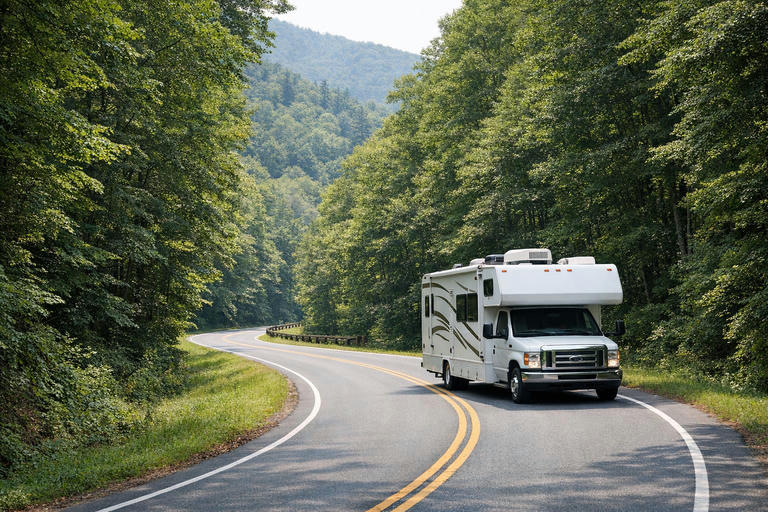
Quiet-Hour Hikes: The Single Best Strategy
There is no formal “quiet hours” rule for trails, but there is a very real quiet window.
What Quiet Hours Mean in Practice
Plan hikes:
- From sunrise until mid-morning, or
- In the last couple of hours before sunset
Early starts improve your chances of:
- Finding parking at trailheads
- Hiking in cooler temperatures (especially in late spring and summer)
- Seeing wildlife
- Experiencing noticeably lighter foot traffic
If you camp inside the park using the official reservation system at Recreation.gov, you gain a major advantage: you are already inside the park boundary when others are still queuing at the entrances.
Use Visitor Centers for Real-Time Guidance
The park operates visitor centers including Sugarlands (near Gatlinburg), Cades Cove, and Oconaluftee (North Carolina side). Rangers can recommend shorter forest loops, lesser-used historic areas, and moderate-length trails aligned with your timing and ability.
Instead of trying to cover the entire park in a single day, choose one primary hike or scenic drive per day.
Scenic Drives Worth Planning Around
Several official park roads shape how you structure your days.
- Cades Cove Loop Road: An 11-mile one-way loop featuring historic buildings and open valley views. Arrive early to reduce slow-moving traffic.
- Newfound Gap Road (US 441 through the park): Connects Tennessee and North Carolina sections and climbs to higher elevations with scenic pullouts.
- Roaring Fork Motor Nature Trail: A narrower scenic driving route near Gatlinburg (check seasonal opening dates and vehicle suitability on the official park site before committing in a larger RV).
Confirm seasonal road closures, weather advisories, and length advisories directly at Great Smoky Mountains National Park before departure.
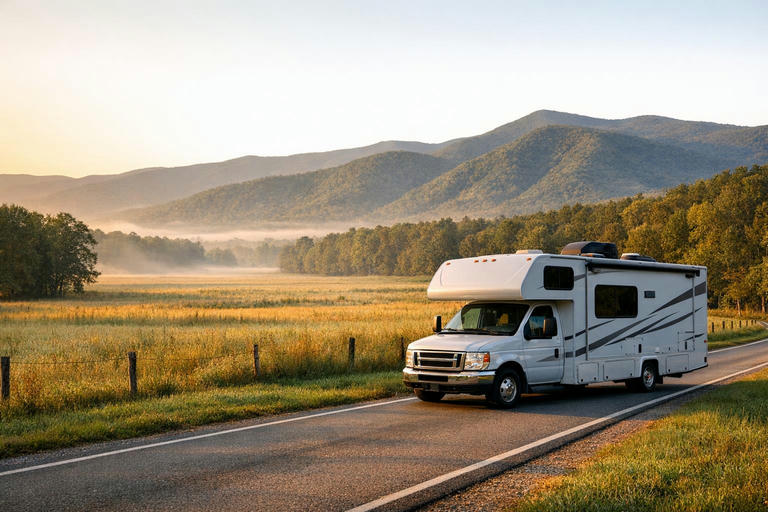
Where to Stay: Official Campgrounds for RVs
Most developed campgrounds inside the park are reservable via Recreation.gov. Always check RV length limits, seasonal dates, and site details before booking.
Elkmont Campground (Near Gatlinburg)
Official booking page: Recreation.gov booking page
Why it works:
- Central access to several park roads
- Large campground footprint
- Good base if you want to minimize relocating
Cades Cove Campground (Near Townsend)
Official booking page: Recreation.gov booking page
Why it works:
- Direct access to Cades Cove Loop Road
- Excellent for early-morning valley access
- Aligns well with a Townsend gateway strategy
Smokemont Campground (North Carolina Side)
Official booking page: Recreation.gov booking page
Why it works:
- Balanced access to eastern sections
- Logical base if crossing via Newfound Gap Road
- Often pairs well with a two-base 7-day plan
If in-park sites are fully booked for summer, look at public campgrounds outside the boundary and drive in early each day.
A 7-Day Smoky Mountains RV Plan from Nashville
This structure reduces daily driving and avoids midday surges.
Day 1 – Nashville to Townsend Area
Collect supplies in Nashville, then head east. Settle into Cades Cove Campground or a nearby base.
Day 2 – Cades Cove at Sunrise
Enter the Cades Cove Loop Road early. Spend midday resting at camp or exploring short nearby walks.
Day 3 – Western or Central Trails
Choose one moderate hike recommended by a visitor center ranger. Return before late-afternoon congestion.
Day 4 – Cross via Newfound Gap Road
Drive Newfound Gap Road from Tennessee into North Carolina. Relocate to Smokemont Campground if desired.
Day 5 – Oconaluftee Area
Explore visitor center exhibits and a single well-chosen trail.
Day 6 – Flexible Scenic Day
Revisit a favorite area early or take a relaxed scenic drive with pullouts.
Day 7 – Return to Nashville
Plan departure to avoid weekend afternoon spikes in gateway towns.
This pacing prioritizes calm over coverage.
Spring and Summer Booking Strategy
Spring wildflowers and summer holidays increase demand.
- Reserve through Recreation.gov as early as possible
- Confirm campground opening dates
- Avoid peak holiday weekends where possible
- Secure campground reservations before booking flights when your dates are fixed
If you plan to extend your journey beyond the Smokies, browse wider Tennessee RV rentals options to connect this trip with other parts of the state.
For mountain-driving safety tips, especially on grades and curves, review our guide on Driving in Mountain Regions Safely before departure.
FAQs: Smoky Mountains RV Tips for First-Timers
Do I have to pay an entrance fee to Great Smoky Mountains National Park?
Do I have to pay an entrance fee to Great Smoky Mountains National Park?
No. The park does not charge an entrance fee. However, a valid parking tag is required for vehicles parked longer than 15 minutes. Always confirm details on the official NPS site before arrival.
Is it difficult to drive a motorhome in the Smokies?
Is it difficult to drive a motorhome in the Smokies?
Main park roads are paved and suitable for motorhomes. Expect curves and elevation changes. Drive slowly, use pullouts, and plan early starts to avoid congestion.
Can I fuel up inside the park?
Can I fuel up inside the park?
No. There are no fuel stations inside park boundaries. Fill your tank in gateway towns before entering.
How early should I arrive at trailheads?
How early should I arrive at trailheads?
Around sunrise is ideal in peak seasons. Parking demand increases quickly from late morning onward.
Final Thought
The Smokies reward restraint. Enter early, hike early, and limit your daily agenda to one core focus area. With realistic drive times, confirmed campground reservations, and calm gateway strategies, this park becomes highly approachable—even for a first US motorhome adventure starting in Nashville.
Ready to compare USA RV rentals?
Use the compact search below to check live availability, compare motorhome options, and start shaping your route.