Washington, DC by RV: 48 Hours on the National Mall Without the Parking Headache
A Washington DC RV weekend can feel intimidating at first. This is the capital of the United States—federal buildings, dense commuter traffic, strict parking rules, and limited space for oversized vehicles.

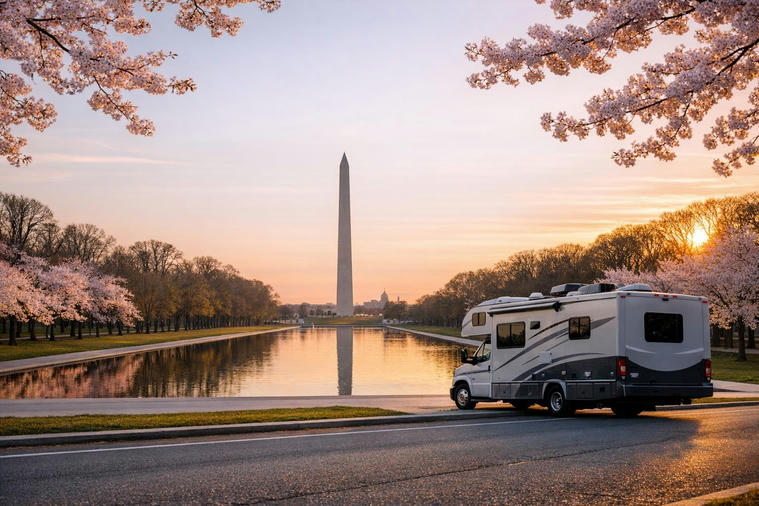
The good news? You do not need to drive your RV anywhere near the National Mall to experience it fully.
With the right base outside the downtown core and a clear plan, you can spend 48 hours exploring the monuments, memorials, and museums of the National Mall with zero parking stress.
This guide is designed for first‑time RV renters, including international visitors traveling in a self‑contained campervan or motorhome for the first time in the USA.
Why Washington, DC Works for an RV City Break
The heart of DC sightseeing is the National Mall and Memorial Parks, managed by the National Park Service. The official National Mall and Memorial Parks site (National Mall and Memorial Parks) confirms that this area includes many of the country’s most recognized landmarks, including:
- The Lincoln Memorial
- The Washington Monument
- The World War II Memorial
- The Vietnam Veterans Memorial
- The Korean War Veterans Memorial
- The Martin Luther King, Jr. Memorial
These sites are arranged along a broad, landscaped park stretching between the U.S. Capitol and the Lincoln Memorial.
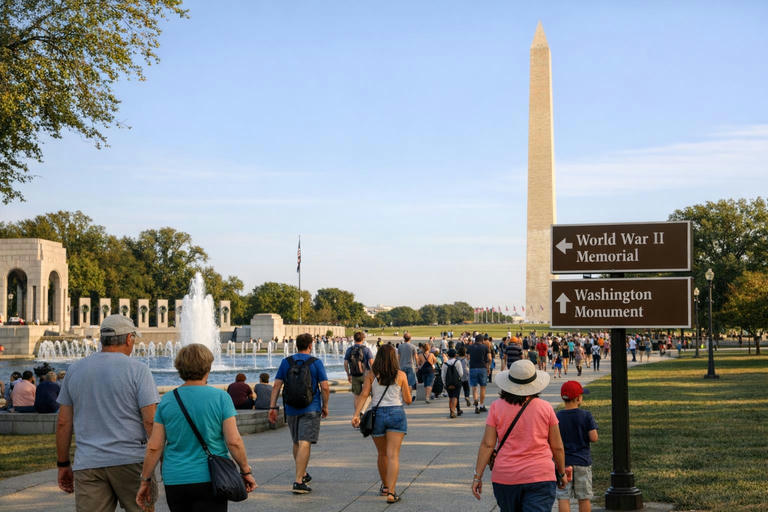
Once you arrive in the Mall area, you explore on foot using wide paved paths. There is no need to move your vehicle between sites.
For seasonal highlights, visitor tips, and general planning inspiration, use the city’s official tourism organization at Washington.org.
For RV travelers, this layout is ideal. You use your RV as accommodation—then enter the city like a day visitor.
The Smart Strategy: Base Outside, Explore Inside
Instead of asking, “Where do I park my RV downtown?” shift the question to:
Where should I safely leave my RV and how do I enter the city efficiently?
The Low‑Stress Plan
- Book a campground within driving distance of Washington, DC.
- Leave your RV set up at your campsite.
- Travel into the city using public transportation.
- Explore the National Mall entirely on foot.
This removes two major stress points for first‑time renters:
- Maneuvering a large vehicle through dense urban traffic
- Finding legal oversized parking near national landmarks
Where to Camp in the Washington, DC Region
Public campground options in the greater DC area, including federally managed sites, are listed on Recreation.gov (Recreation.gov).
Because availability, vehicle length limits, and seasonal access can change, always:
- Search the Washington, DC area on Recreation.gov.
- Enter your exact travel dates.
- Filter by RV length.
- Check individual site details carefully.
Confirm:
- Maximum vehicle length allowed
- Hookup availability (some sites may be electric only or dry camping)
- Road access suitability for your vehicle size
- Check‑in and gate procedures
Spring Break and cherry blossom season are high‑demand periods. Reserve as early as possible.
If you are still choosing a vehicle, prioritize maneuverability over maximum interior space. A compact option is often ideal for city‑focused travel. Compare models through an RV rental in Washington or review broader District of Columbia RV rentals to match your comfort level.
Vehicle Size Guidance for DC
For a 48‑hour urban visit:
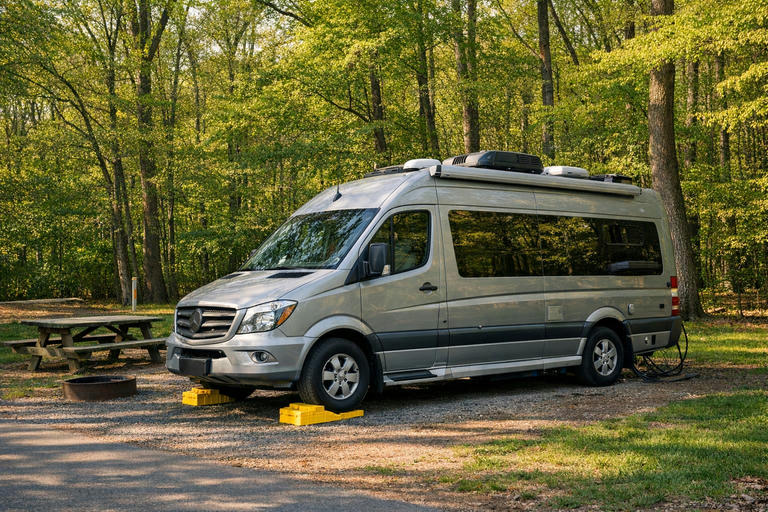
- Class B campervans are the easiest to manage on regional roads.
- Compact Class C motorhomes balance comfort and drivability.
- Large Class A motorhomes add complexity in traffic, tight entrance roads, and fuel stops.
You do not need the largest RV for a short DC stay. Choose a size that feels manageable, especially if this is your first time driving in the United States.
Getting Into the City Without Driving Your RV Downtown
Washington, DC experiences significant weekday commuter traffic, especially during morning and late afternoon peak hours.
For general visitor and transportation planning, consult the official city resource at Washington.org.
Key principles for RV renters:
- Drive only as far as your campground.
- Leave the RV parked and secured.
- Use public transportation to reach the National Mall.
Public transit eliminates concerns about:
- Street parking restrictions
- Oversized vehicle limits in parking garages
- Time‑limited enforcement around federal buildings
If you decide to drive partway before switching to transit, confirm all parking rules through official sources only.
48 Hours on the National Mall: A Walkable Structure
The National Mall is a long, open park corridor. Splitting your visit into two focused days helps prevent fatigue.
Before you go, check official maps, alerts, and any temporary closures at National Mall and Memorial Parks.
Day 1: The Monument Core
Choose a logical walking direction. A common sequence includes:
- Lincoln Memorial
- Vietnam Veterans Memorial
- Korean War Veterans Memorial
- World War II Memorial
- Washington Monument grounds
This cluster delivers some of the most iconic views in the United States, including long sightlines across the Reflecting Pool.
Distances seem short on a map, but expect substantial walking. Wear supportive shoes and carry water.
Day 2: Museums and Additional Memorials
The Mall also includes multiple Smithsonian museums and federally managed institutions located directly along the park corridor.
Check official museum information via NPS and Washington.org for:
- Opening hours
- Entry procedures
- Special exhibitions
Plan to focus on one or two major museums rather than attempting to see everything. Combine indoor time with outdoor memorial visits to avoid fatigue.
Spring in Washington: What to Expect
Spring is one of the busiest and most visually striking times to visit.
According to Washington.org, peak travel coincides with cherry blossom season and school holidays. In practice, this means:
- Larger weekend crowds
- High campground demand
- Pleasant daytime walking temperatures
For a calmer experience, arrive at the Mall early in the morning. Sunrise offers lighter crowds and strong photographic conditions.
Parking Reality Check: Downtown DC and RVs
Downtown Washington, DC is not designed for casual RV parking.
Even though the National Mall is federally managed parkland, that does not mean RV parking is available near major memorials.
Before assuming anything, verify details directly on the National Park Service site for National Mall and Memorial Parks.
Do not rely on:
- Old blog posts
- Forum comments
- Unofficial parking apps
For most first‑time renters, the safest strategy is simple: do not attempt to park your RV at the National Mall.
Treat your RV as accommodation—not urban transport.
For a broader understanding of overnight parking considerations during your US trip, see our handbook hub (How It Works) and the guide to Overnight Parking Laws Where You can and can't Stay.
Driving Confidence for First‑Time US RV Travelers
If this is your first RV experience in the United States:
- Practice turning and reversing before entering busy regions.
- Know your vehicle height and width.
- Stay in the right lane on multi‑lane highways unless overtaking.
- Avoid peak commuter hours when possible.
Your only city driving goal is reaching your campground safely. Everything else should be planned as pedestrian exploration.
Frequently Asked Questions: Washington DC RV Weekend
Can I park my RV at or near the National Mall?
Can I park my RV at or near the National Mall?
Do not assume that RV parking is available near memorials. The National Park Service manages the area and provides official guidance at nps.gov. Oversized vehicle parking is extremely limited, and standard garages are generally not suitable for motorhomes. Plan to leave your RV at a campground.
How far in advance should I book a campground for spring?
How far in advance should I book a campground for spring?
Spring Break and cherry blossom season are high‑demand periods. Search and reserve through Recreation.gov as early as your travel dates are confirmed. Availability can become limited weeks or even months ahead.
Is Washington, DC manageable for first‑time RV drivers?
Is Washington, DC manageable for first‑time RV drivers?
Yes—if you avoid downtown driving. Base yourself outside the core, use public transportation, and focus on walkable sightseeing. Choosing a smaller RV makes regional driving significantly easier.
Do I need timed tickets for monuments or memorials?
Do I need timed tickets for monuments or memorials?
Outdoor memorials along the National Mall are generally open to the public, but requirements can change for certain attractions or special programs. Always verify current information directly with the National Park Service or Washington.org before your visit.
Final Thoughts: Big Monuments, Low Stress
A Washington DC RV weekend does not require complicated urban navigation or risky parking decisions.
The formula is simple:
- Reserve a campground early through Recreation.gov.
- Use official maps and alerts from the National Park Service.
- Follow seasonal and planning guidance from Washington.org.
- Explore the National Mall over two well‑paced days on foot.
Handled this way, the capital becomes one of the most rewarding and manageable urban stops in the United States—especially for first‑time RV travelers.
Plan smart, choose the right‑sized vehicle, and let the Mall do the rest.
Ready to compare USA RV rentals?
Use the compact search below to check live availability, compare motorhome options, and start shaping your route.